Comparing Timelines
Exploring the overlapping histories of "Space Race" and "Cold War".

Space Race
1921 - 1991
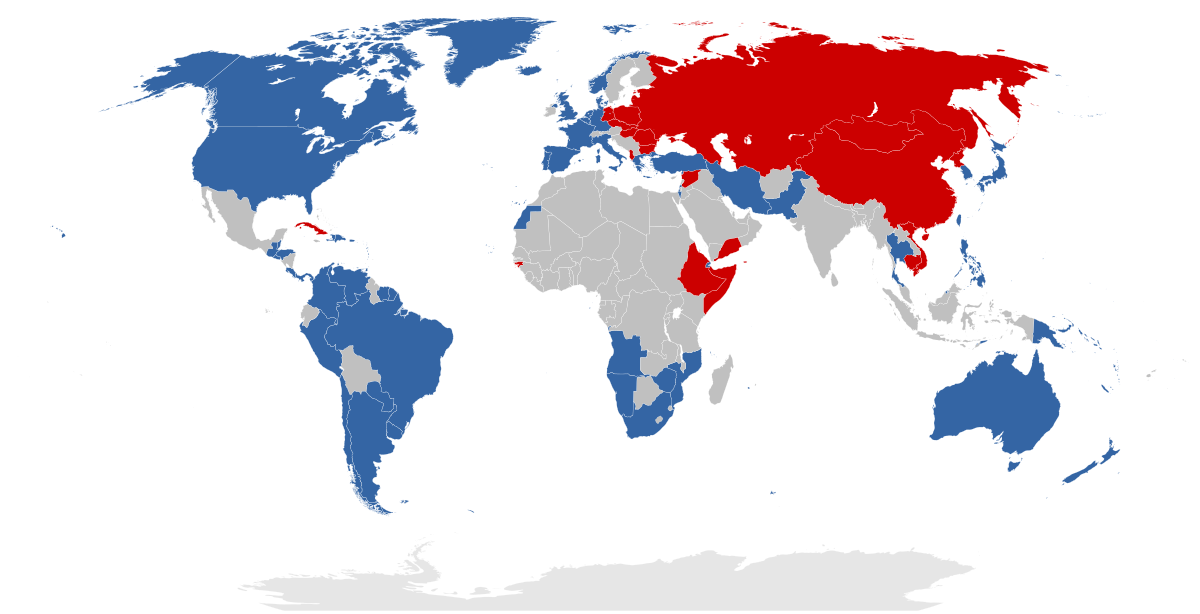
Cold War
1945 - 1991
1921 CE
Soviet Gas Dynamics Laboratory Established
The Soviet military sanctioned the Gas Dynamics Laboratory, a small research laboratory to explore solid-fuel rockets, led by Nikolai Tikhomirov. This marked the beginning of organized Soviet rocket development efforts.
1928 CE
First Soviet Solid Fuel Rocket Test
The first test-firing of a solid fuel rocket was carried out by the Soviet Gas Dynamics Laboratory. This represented an early milestone in Soviet rocket technology development.
1933 CE
First Soviet Liquid-Fueled Rocket Launch
Soviet rocket pioneers Sergey Korolev, Friedrich Zander, Mikhail Tikhonravov and Leonid Dushkin launched GIRD-X, the first Soviet liquid-fueled rocket. This achievement demonstrated Soviet progress in advanced rocket technology.
1936 CE
Soviet Rocket Development Damaged by Great Purge
Joseph Stalin's Great Purge severely damaged Soviet rocket technology progress. Many scientists and engineers were imprisoned or executed, setting back the Soviet rocket program significantly.
1945 CE
End of World War II
The Second World War ended, setting the stage for the Cold War as former allies the US and USSR began to diverge in their post-war visions. This marked the beginning of tensions that would define the next four decades of international relations.
George Orwell Coins 'Cold War' Term
Writer George Orwell used the term 'cold war' in his essay 'You and the Atomic Bomb', contemplating a world living under the threat of nuclear warfare. This early usage helped establish the terminology that would define the era.
1946 CE
George Kennan's Long Telegram
George F. Kennan's 'Long Telegram' from Moscow to Washington articulated the US government's increasingly hard line against the Soviets. This telegram galvanized policy debate and became the basis for US strategy toward the Soviet Union, laying groundwork for the containment doctrine.
Churchill's Iron Curtain Speech
Former British Prime Minister Winston Churchill delivered his famous 'Iron Curtain' speech, calling for an Anglo-American alliance against the Soviets and accusing them of establishing an 'iron curtain' dividing Europe. This speech marked a public acknowledgment of the growing East-West divide.

Remains of the Iron Curtain in the Czech Republic, 2014
Physical remnants of the barrier that divided Europe during the Cold War
Stalin Responds to Churchill
Stalin responded vigorously to Churchill's Iron Curtain speech, comparing Churchill to Adolf Hitler and calling the speech 'a call for war on the USSR.' This exchange marked the beginning of public Cold War rhetoric between East and West.
1947 CE
National Security Act Signed
President Truman signed the National Security Act of 1947, creating a unified Department of Defense, the Central Intelligence Agency (CIA), and the National Security Council (NSC). These institutions became the main bureaucracies for US defense policy during the Cold War.
Truman Doctrine Announced
President Harry S. Truman announced the Truman Doctrine, marking the beginning of US containment policy. Truman called for $400 million to intervene in Greece's civil war and framed the conflict as a contest between free peoples and totalitarian regimes, establishing a bipartisan foreign policy consensus.
Bernard Baruch First Uses 'Cold War' for US-Soviet Confrontation
Bernard Baruch, an influential advisor to Democratic presidents, first used the term 'cold war' to describe the specific post-war geopolitical confrontation between the Soviet Union and United States. His speech proclaimed 'we are today in the midst of a cold war.'
Marshall Plan Enacted
The United States enacted the Marshall Plan, pledging economic assistance for all European countries willing to participate. This $13 billion program aimed to rebuild democratic and economic systems in Europe while countering perceived communist threats.

The labeling used on the Marshall Plan economic aid to Western Europe
Official logo of the Marshall Plan aid program
Cominform Created
The Soviets created Cominform to impose orthodoxy within the international communist movement and tighten political control over Soviet satellites through coordination of communist parties in the Eastern Bloc. This represented the Soviet response to Western alliance-building.
1948 CE
Czechoslovak Communist Coup
Czech Communists executed a coup d'état in Czechoslovakia, forming the Czechoslovak Socialist Republic. This was the only Eastern Bloc state the Soviets had permitted to retain democratic structures, and the brutal coup shocked Western powers more than any previous event.
Marshall Plan Signed into Law
President Harry S. Truman officially signed the Marshall Plan into law, authorizing over $13 billion in aid to Western European countries. This massive economic assistance program was designed to rebuild Europe and prevent the spread of communism.
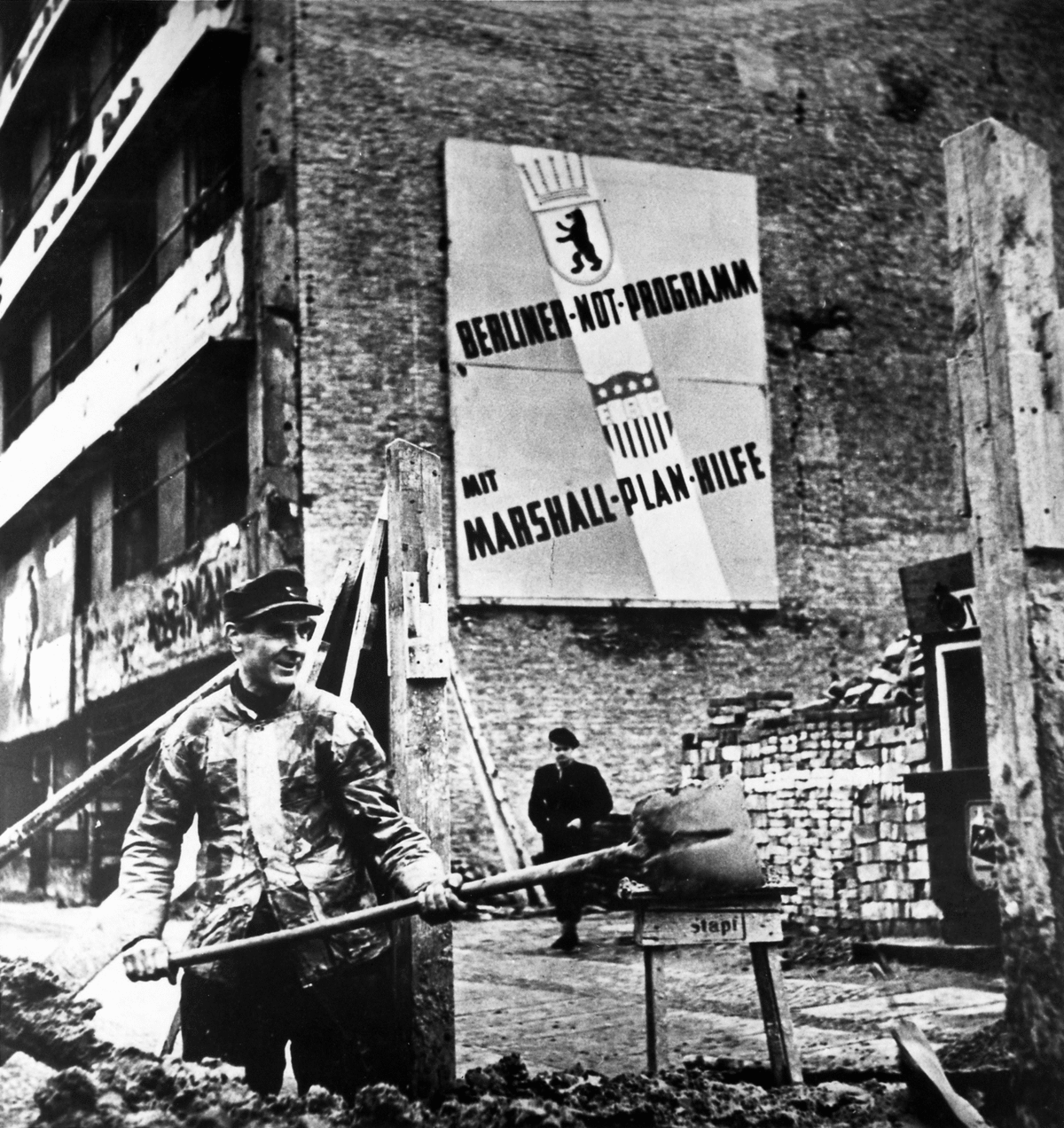
Construction in West Berlin under Marshall Plan aid
Example of reconstruction efforts funded by Marshall Plan assistance
Berlin Blockade Begins
Stalin instituted the Berlin Blockade, preventing Western supplies from reaching West Berlin. This was one of the first major crises of the Cold War, prompting the massive Berlin Airlift by the United States, Britain, France, and other allies to supply the city despite Soviet threats.

American C-47s unloading at the Berlin Tempelhof Airport during the Berlin Blockade
Aircraft delivering supplies during the Berlin Airlift
Berlin Municipal Elections
Berlin municipal elections were held with 86% turnout and overwhelming victory for non-communist parties, effectively dividing the city into East and West. The results demonstrated popular rejection of communist control and strengthened Western resolve.
1949 CE
First Mammal in Space
Albert II, a rhesus monkey, became the first mammal in space when launched by the US on a sub-orbital flight. The monkey died on landing due to a parachute malfunction, but the mission demonstrated the possibility of sending living creatures to space.
Soviet Union Becomes Second Nuclear Power
The Soviet Union became the second nuclear power after the United States with the successful RDS-1 nuclear weapon test. This achievement intensified the Cold War arms race and provided the backdrop for the space competition.
People's Republic of China Founded
Mao Zedong's People's Liberation Army defeated Chiang Kai-shek's US-backed Kuomintang, establishing the People's Republic of China. The Kremlin promptly created an alliance with the newly formed communist state, significantly expanding the communist bloc.

Mao Zedong and Joseph Stalin in Moscow, December 1949
Meeting between communist leaders cementing the Sino-Soviet alliance
Radio Free Europe Begins
A major propaganda effort began with Radio Free Europe/Radio Liberty, dedicated to bringing about the peaceful demise of the communist system in the Eastern Bloc. This represented a key component of the ideological battle of the Cold War.
NATO Founded
Britain, France, the United States, Canada and eight other western European countries signed the North Atlantic Treaty, establishing NATO. This military alliance was designed to counter Soviet influence and provide collective security for Western nations.

President Truman signs the North Atlantic Treaty with guests in the Oval Office
Historic signing ceremony establishing NATO
Federal Republic of Germany Established
The US, Britain and France established the Federal Republic of Germany from the three Western zones of occupation. This formalized the division of Germany and represented a key step in the institutionalization of the Cold War divide in Europe.
Berlin Blockade Ends
Stalin lifted the Berlin Blockade after nearly a year, ending the first major Cold War crisis. The successful Berlin Airlift demonstrated Western resolve and firmly linked West Berlin to the United States, marking a significant early victory for the West.
Soviet Union Tests First Nuclear Weapon
The first Soviet atomic device was detonated in Semipalatinsk, Kazakh SSR, ending the American nuclear monopoly. This development dramatically escalated the Cold War and began the nuclear arms race between the superpowers.
German Democratic Republic Proclaimed
The Soviet Union proclaimed its zone of occupation in Germany the German Democratic Republic, completing the formal division of Germany into East and West. This institutionalized the partition that would last until 1990.
1950 CE
Soviet R-1 Rocket Enters Service
The R-1, a Soviet copy of the German A-4 (V-2) rocket, entered service in the Soviet Army. This marked the beginning of operational Soviet ballistic missile capability.
NSC 68 Document
The National Security Council produced NSC 68, a secret document proposing reinforcing pro-Western alliance systems and quadrupling defense spending. This document escalated and expanded the containment doctrine in response to the communist revolution in China and end of American atomic monopoly.
Korean War Begins
Kim Il Sung's North Korean People's Army invaded South Korea, beginning the Korean War. This became one of the most significant examples of Cold War containment policy implementation, with UN forces led by the US intervening to defend South Korea.

General Douglas MacArthur observes naval shelling of Incheon, Korea
UN Command operations during the Korean War
1951 CE
Public Interest in Space Travel Sparked
Soviet rocketry engineer Mikhail Tikhonravov published 'Flight to the Moon' in the newspaper Pionerskaya pravda, describing a two-person interplanetary spaceship. This article sparked public interest in space travel and predicted space flight within 10-15 years.
1953 CE
Joseph Stalin Dies
Joseph Stalin died, leading to changes in Soviet leadership that shifted the dynamic of the Cold War. Nikita Khrushchev eventually won the ensuing power struggle by the mid-1950s and began a process of de-Stalinization.
Dwight D. Eisenhower Inaugurated
Dwight D. Eisenhower was inaugurated as US President, bringing new leadership to American Cold War strategy. Eisenhower moved to reduce military spending while continuing to fight the Cold War effectively, introducing the 'New Look' strategy.
Operation Ajax in Iran
President Eisenhower implemented Operation Ajax, a covert CIA coup operation to overthrow Iranian Prime Minister Mohammad Mosaddegh. The operation installed the pro-Western Shah Mohammad Reza Pahlavi, demonstrating US willingness to intervene covertly in Third World countries.
Korean Armistice Agreement
The Korean Armistice Agreement was approved, ending active hostilities in the Korean War. The war ended in stalemate with minimal border changes, demonstrating both the limits of military force in the Cold War and the effectiveness of containment policy.
1954 CE
Guatemalan Coup
The CIA supported a coup d'état that ousted left-wing Guatemalan President Jacobo Árbenz. The post-coup military junta reversed progressive land reforms and established anti-communist measures, demonstrating US intervention in Latin America during the Cold War.
1955 CE
US Announces Intent to Launch Satellites
James C. Hagerty, President Eisenhower's press secretary, announced that the United States intended to launch 'small Earth circling satellites' as part of the International Geophysical Year. This announcement marked the official beginning of the Space Race.
Soviet Union Responds to US Satellite Announcement
At the Sixth Congress of the International Astronautical Federation in Copenhagen, Soviet scientist Leonid I. Sedov announced the Soviet Union's intention to launch a satellite 'in the near future.' This response escalated the space competition.
Soviet Space Commission Established
Sergei Korolev succeeded in convincing the Soviet Academy of Sciences to establish a commission dedicated to achieving the goal of launching a satellite into Earth orbit before the United States. This can be viewed as the de facto start date of the space race.
Warsaw Pact Established
The Soviet Union established the Warsaw Pact as a formal military alliance of Eastern Bloc countries, standing in opposition to NATO. This completed the division of Europe into two opposing military blocs and institutionalized the Cold War military confrontation.
Bundeswehr Established
The West German military, the Bundeswehr, was established as part of West Germany's rearmament and full NATO membership. This represented the rehabilitation of German military power within the Western alliance framework.
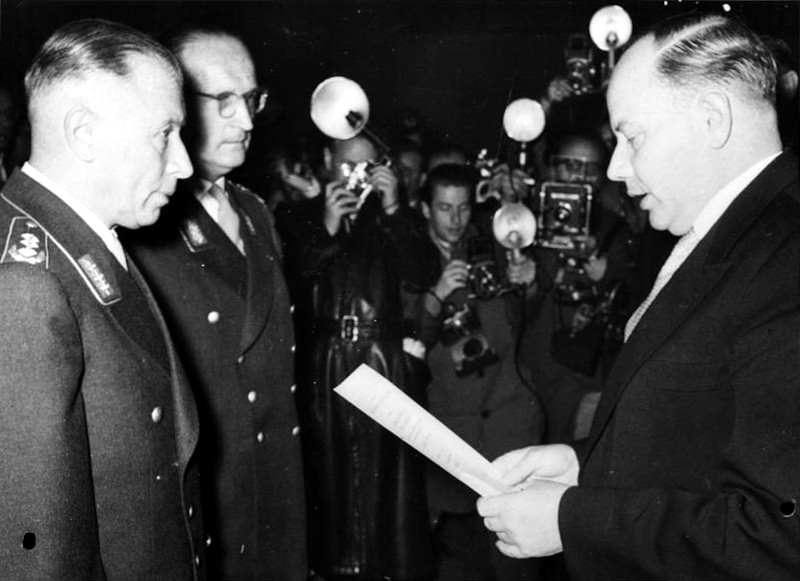
Generals Adolf Heusinger and Hans Speidel sworn into the newly founded Bundeswehr
Ceremony establishing the West German military
Bandung Conference
At the Bandung Conference in Indonesia, dozens of Third World governments resolved to stay out of the Cold War. This conference led to the creation of the Non-Aligned Movement and represented an alternative to choosing sides in the East-West competition.
1956 CE
Khrushchev Denounces Stalin
Nikita Khrushchev denounced Joseph Stalin and proceeded to ease controls over the party and society in a process known as de-Stalinization. This marked a significant shift in Soviet domestic and foreign policy approach.
Hungarian Revolution
The Hungarian Revolution occurred as a popular anti-communist uprising. The new regime disbanded secret police and pledged to withdraw from the Warsaw Pact, but the Soviet Army invaded, killing thousands and crushing the revolution. This demonstrated the limits of Soviet tolerance for reform.
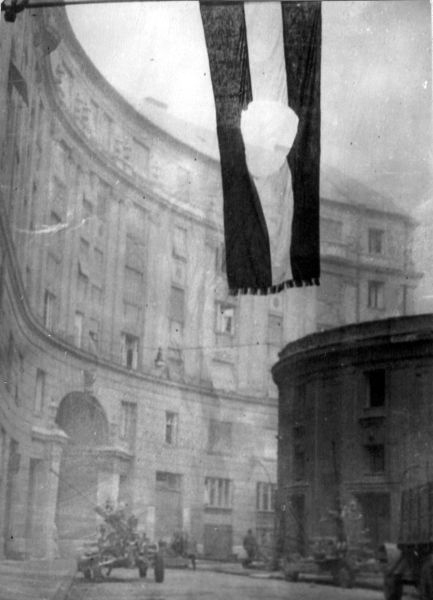
Hungarian flag with communist coat of arms cut out
Symbol of anti-Soviet revolutionary sentiment during the Hungarian Revolution
Suez Crisis
During the Suez Crisis, Eisenhower used American nuclear superiority to face down Soviet threats to intervene in the Middle East. This demonstrated how nuclear weapons could be used as diplomatic leverage during international crises.
Khrushchev's 'We Will Bury You' Declaration
While addressing Western dignitaries in Moscow, Khrushchev infamously declared 'Whether you like it or not, history is on our side. We will bury you,' shocking everyone present. He later claimed this referred to the historically fated victory of communism over capitalism, not nuclear war.

Soviet leaders Voroshilov, Khrushchev, and Finnish president Kekkonen
Diplomatic meeting showing Khrushchev's international engagement
1957 CE
R-7 ICBM First Successful Flight
The Soviet R-7 Semyorka flew 6,000 km and became the world's first intercontinental ballistic missile. This achievement gave the USSR the capability to strike US territory with nuclear weapons and provided the launch vehicle for future space missions.

The Soviet stable of Sputnik, Vostok, Voskhod, and Soyuz launch vehicles were all derivatives of the R-7 Semyorka ICBM.
The R-7 became the basis for the Soviet space program
Sputnik 1 Launched
The Soviet Union launched Sputnik 1, the first artificial satellite, into Earth orbit. This achievement shocked the world and marked the beginning of the Space Age, giving the USSR an early lead in the Space Race.

Soviet stamp commemorating Sputnik 1, 1957
Soviet commemorative stamp celebrating the first artificial satellite
Sputnik 2 Launches with Laika
The Soviet Union launched Sputnik 2 carrying Laika, a dog, making her the first animal to orbit Earth. The mission demonstrated that living creatures could survive in space, though Laika died from stress and overheating during the flight.

Laika on a Romanian post stamp
Commemorative stamp honoring Laika, the first animal in orbit
Project Vanguard Launch Failure
The US Project Vanguard launch failed spectacularly at Cape Canaveral, exploding seconds after launch. The failure became an international joke with nicknames like 'Flopnik' and 'Kaputnik,' highlighting American struggles to match Soviet space achievements.
Rapacki Plan Proposed
Polish foreign minister Adam Rapacki proposed the Rapacki Plan for a nuclear-free zone in central Europe. While public opinion was favorable in the West, leaders of West Germany, Britain, France and the US rejected it, fearing it would leave Warsaw Pact conventional armies dominant.
First ICBM and Sputnik Launch
The Soviets successfully launched the world's first intercontinental ballistic missile in August, followed by the first Earth satellite, Sputnik 1, in October. These achievements led to the Sputnik crisis and inaugurated the Space Race between the superpowers.

Space Race milestones including Sputnik 1 and Apollo 11
Key achievements in the Cold War space competition
1958 CE
Explorer 1 Launched
The United States successfully launched Explorer 1, its first satellite, on a Juno I rocket. The satellite discovered the Van Allen radiation belt, marking America's first major scientific achievement in space and its entry into the Space Race.

William Hayward Pickering, James Van Allen, and von Braun display a model of Explorer 1 at a news conference after confirmation the satellite was in orbit.
Key figures celebrating America's first satellite success
NASA Established
President Eisenhower signed the National Aeronautics and Space Act, creating NASA from the National Advisory Committee on Aeronautics. This established a civilian space agency to coordinate America's space efforts and compete with the Soviet Union.
Berlin Crisis of 1958-1959
Khrushchev made an unsuccessful attempt to turn all of Berlin into an independent, demilitarized 'free city,' giving Western powers a six-month ultimatum to withdraw troops. NATO rejected the ultimatum, and Khrushchev withdrew it in return for a Geneva conference.
1959 CE
Luna 1 Launched
The Soviet Union launched Luna 1, the first spacecraft to reach the vicinity of the Moon, though it missed its target. This mission marked the beginning of lunar exploration and demonstrated Soviet capability for deep space missions.
Luna 2 Impacts Moon
Luna 2 became the first human-made object to reach the Moon when it successfully impacted the lunar surface. This achievement gave the Soviet Union another space first and demonstrated their growing capability in space exploration.
Luna 3 Photographs Far Side of Moon
Luna 3 successfully flew by the Moon and transmitted the first pictures of its far side. This historic achievement provided humanity's first glimpse of the Moon's hidden hemisphere and demonstrated advanced Soviet space technology.

The first photo of the far side of the Moon, taken by Luna 3
Historic first image of the Moon's far side
Cuban Revolution Victory
The 26th of July Movement, led by Fidel Castro and Che Guevara, seized power in Cuba. Although Castro initially refused to categorize his government as socialist, he appointed Marxists to senior positions, eventually bringing the first communist regime to the Western Hemisphere.

Che Guevara and Fidel Castro in 1961
Leaders of the Cuban Revolution
Khrushchev Visits United States
Khrushchev made a two-week visit to the United States as part of an upswing in diplomacy. This visit, along with plans for a summit in 1960, represented substantial hopes for détente, though these were later disrupted by the U-2 spy plane incident.
1960 CE
U-2 Spy Plane Incident
The U-2 spy plane scandal disrupted planned US-Soviet summit talks when Eisenhower was caught lying about American surveillance aircraft intrusions into Soviet territory. This incident damaged prospects for improved relations and demonstrated the fragility of détente efforts.
Congo Crisis Begins
The Congo Crisis erupted in the newly independent Republic of the Congo, leading to CIA-backed interventions. President Joseph Kasa-Vubu dismissed Prime Minister Patrice Lumumba, and Colonel Mobutu Sese Seko seized power through a military coup, with Lumumba eventually executed.
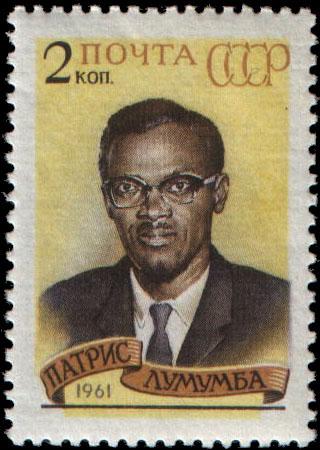
1961 USSR stamp commemorating Patrice Lumumba
Soviet commemoration of the assassinated Congolese leader
1961 CE
Yuri Gagarin First Human in Space
Soviet cosmonaut Yuri Gagarin became the first human to orbit Earth aboard Vostok 1, completing a 108-minute flight. This achievement shocked the world and gave the Soviet Union a major victory in the Space Race, prompting the US to accelerate its space program.

A 1964 Stamp with Yuri Gagarin, and an intentionally inaccurate Vostok
Soviet commemorative stamp celebrating Gagarin's historic flight
Alan Shepard First American in Space
Alan Shepard became the first American in space with a suborbital flight on Mercury-Redstone 3 (Freedom 7). Though not achieving orbit like Gagarin, Shepard demonstrated manual spacecraft control and marked America's entry into human spaceflight.

Alan Shepard, the first American in space, 1961
Alan Shepard preparing for his historic suborbital flight
Kennedy Announces Moon Landing Goal
President John F. Kennedy announced the goal of landing a man on the Moon and returning him safely to Earth before the end of the decade. This bold commitment transformed the Space Race and focused American efforts on the lunar landing mission.
Sino-Soviet Split Becomes Official
The Sino-Soviet split became official, bringing the two communist states to the brink of war. This fundamental break in the communist bloc significantly altered Cold War dynamics and created opportunities for US diplomatic initiatives with China.
Non-Aligned Movement Founded
The Belgrade-headquartered Non-Aligned Movement was created, culminating the consensus reached at the 1955 Bandung Conference. This movement provided an alternative to choosing sides in the Cold War for newly independent nations.
Bay of Pigs Invasion
The Kennedy administration mounted an unsuccessful CIA-organized invasion of Cuba by Cuban exiles at Playa Girón and Playa Larga. This failure publicly humiliated the United States and pushed Castro to publicly embrace Marxism-Leninism and seek Soviet support.
Berlin Wall Constructed
East Germany erected a barbed-wire barrier that would eventually become the Berlin Wall, effectively closing the loophole that allowed East Germans to flee to the West. This became the most visible symbol of the Cold War division of Europe.

Soviet and American tanks face each other at Checkpoint Charlie
Tense confrontation during the Berlin Crisis of 1961
1962 CE
John Glenn First American to Orbit Earth
Astronaut John Glenn became the first American to orbit Earth, completing three orbits in Friendship 7. This achievement helped restore American confidence in the Space Race and demonstrated that the US could match Soviet orbital capabilities.
Mariner 2 First Successful Interplanetary Mission
NASA's Mariner 2 became the first spacecraft to successfully fly by another planet when it passed Venus. This achievement marked the beginning of interplanetary exploration and demonstrated American capability in deep space missions.
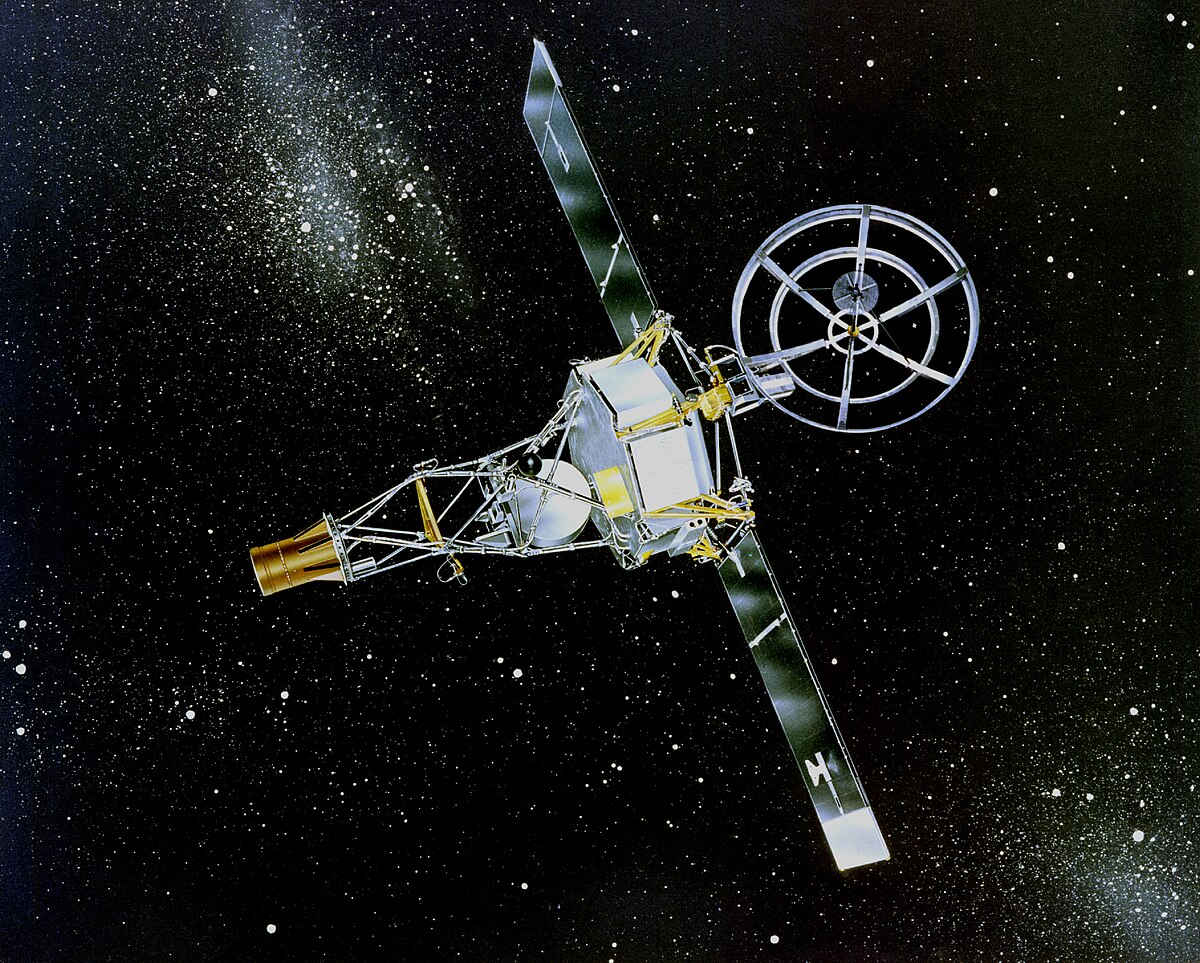
Artist's impression of Mariner 2, the first successful interplanetary spacecraft
Mariner 2 pioneered interplanetary exploration
Cuban Missile Crisis
The Cuban Missile Crisis brought the world closer to nuclear war than ever before. Kennedy responded to Soviet nuclear missiles in Cuba with a naval blockade and ultimatum. Khrushchev backed down, removing missiles in exchange for a US pledge not to invade Cuba and secret removal of US missiles from Turkey.

Aerial photograph of a Soviet missile site in Cuba
US spy aircraft photograph revealing Soviet missile installations
1963 CE
Valentina Tereshkova First Woman in Space
Soviet cosmonaut Valentina Tereshkova became the first woman in space aboard Vostok 6. Her three-day mission demonstrated that women could perform effectively in space and gave the Soviet Union another space first.
Partial Nuclear Test Ban Treaty
The Partial Nuclear Test Ban Treaty was signed by the United States, Soviet Union, and over 100 other nations. This treaty banned nuclear weapons tests in the atmosphere, outer space, and underwater, restricting tests to underground environments.
1964 CE
Voskhod 1 First Multi-Person Crew
The Soviet Union launched Voskhod 1 with a three-person crew, achieving the first spaceflight with multiple crew members. This mission beat the American Gemini program to this milestone and demonstrated Soviet spacecraft capabilities.
Khrushchev Ousted
Khrushchev's Kremlin colleagues managed to oust him, allowing him a peaceful retirement. He was accused of rudeness, incompetence, ruining Soviet agriculture, bringing the world to the brink of nuclear war, and becoming an international embarrassment with the Berlin Wall.
Vietnam War Escalation
Following the Gulf of Tonkin incident, President Lyndon B. Johnson received broad authorization to increase US military presence in Vietnam, deploying ground combat units and increasing troop levels to 184,000. This marked major escalation of US involvement in the Vietnam conflict.
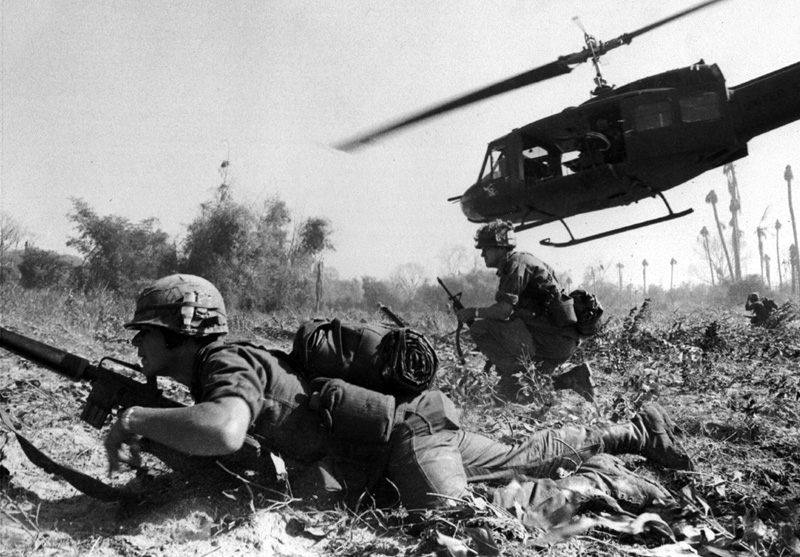
US combat operations during the Battle of Ia Drang, South Vietnam
American military operations in the Vietnam War
1965 CE
Alexei Leonov First Spacewalk
Soviet cosmonaut Alexei Leonov performed the first extravehicular activity (spacewalk) during the Voskhod 2 mission. This 12-minute spacewalk demonstrated human capability to work outside spacecraft, though Leonov nearly died when his spacesuit expanded.
Gemini 6 and 7 First Space Rendezvous
Gemini 6A and Gemini 7 achieved the first rendezvous between two crewed spacecraft, coming within one foot of each other. This achievement demonstrated critical technology needed for lunar missions and marked a turning point in American space capabilities.

Rendezvous of Gemini 6 and 7, December 1965
Historic first rendezvous between two crewed spacecraft
1966 CE
Luna 9 First Soft Moon Landing
Luna 9 achieved the first soft landing on the Moon and successfully transmitted photography from the lunar surface. This achievement demonstrated that spacecraft could safely land on the Moon and provided the first close-up images of the lunar surface.

First photo of the surface of the Moon, taken by Luna 9
Historic first photograph from the Moon's surface
Venera 3 First Impact on Another Planet
Venera 3 became the first human-made object to impact another planet when it crashed on Venus. Though contact was lost before impact, this mission marked the beginning of planetary exploration and demonstrated Soviet deep space capabilities.
1967 CE
Apollo 1 Fire Kills Three Astronauts
A fire during a ground test of Apollo 1 killed astronauts Gus Grissom, Ed White, and Roger Chaffee. This tragedy led to major safety improvements in the Apollo program and delayed the first crewed Apollo mission by nearly two years.

Charred interior of the Apollo 1 spacecraft after the fire that killed the crew
The tragic aftermath of the Apollo 1 fire
Outer Space Treaty Signed
The United States, Soviet Union, and United Kingdom signed the Treaty on Principles Governing the Activities of States in the Exploration and Use of Outer Space. This treaty established space as the common heritage of mankind and prohibited weapons of mass destruction in space.
Vladimir Komarov Dies in Soyuz 1
Soviet cosmonaut Vladimir Komarov became the first in-flight spaceflight fatality when Soyuz 1's parachute system failed during reentry. This tragedy highlighted the dangers of space exploration and led to improvements in Soviet spacecraft design.

The remains of Vladimir Komarov
The tragic end of the first in-flight space fatality
Glassboro Summit
Soviet Premier Alexei Kosygin met with US President Lyndon B. Johnson at the Glassboro Summit Conference. This meeting represented continued efforts at dialogue and détente between the superpowers despite ongoing tensions over Vietnam and other issues.

Soviet Premier Alexei Kosygin with US President Lyndon B. Johnson
Summit meeting between superpower leaders
Outer Space Treaty Signed
The Treaty on Principles Governing the Activities of States in the Exploration and Use of Outer Space was signed by the United States, Soviet Union, and United Kingdom. The treaty established space as a domain for peaceful purposes only, prohibiting nuclear weapons in orbit.
1968 CE
Apollo 8 First Humans to Leave Earth Orbit
Apollo 8 carried Frank Borman, James Lovell, and William Anders on the first crewed mission to leave Earth orbit and travel to the Moon. Their Christmas Eve broadcast from lunar orbit was one of the most watched TV programs in history.

Earthrise, as seen from Apollo 8, December 24, 1968 (photograph by astronaut William Anders)
The iconic Earthrise photograph taken during Apollo 8
Tet Offensive
The Tet Offensive proved to be the turning point of the Vietnam War. Despite years of American aid, South Vietnamese forces were unable to withstand the communist offensive, and the task fell to US forces, demonstrating the limitations of the US strategy.
Prague Spring and Soviet Invasion
A period of political liberalization in Czechoslovakia called the Prague Spring included reforms for press freedom, speech, movement, and potential Warsaw Pact withdrawal. On August 20, the Soviet Army and Warsaw Pact allies invaded, crushing the reforms and causing massive emigration.

The invasion of Czechoslovakia by the Soviet Union in 1968
One of the biggest military operations in Europe since World War II
1969 CE
Apollo 11 Moon Landing
Neil Armstrong and Buzz Aldrin became the first humans to land on the Moon while Michael Collins orbited above. Armstrong's first steps on the lunar surface were watched by an estimated 723 million people worldwide, marking America's victory in the Space Race.
"Buzz" Aldrin facing away from Camera, with the Apollo 11 Lunar Lander
Iconic image of Buzz Aldrin on the Moon's surface
Sino-Soviet Border Conflict
Tensions along the Chinese-Soviet border reached their peak with a border conflict that brought the two communist states to the brink of war. This conflict demonstrated the complete breakdown of the Sino-Soviet alliance and created opportunities for US diplomacy.
1970 CE
Venera 7 First Data from Another Planet's Surface
Soviet Venera 7 became the first spacecraft to successfully transmit data from the surface of another planet. The probe measured Venus's surface temperature at 475°C and atmospheric pressure at 92 bars, providing crucial data about Venus's hostile environment.
Luna 16 First Robotic Sample Return
Luna 16 became the first uncrewed spacecraft to return samples from the Moon to Earth. This achievement demonstrated that robotic missions could accomplish complex tasks and provided an alternative to crewed lunar exploration.
1971 CE
Mars 2 First Object to Impact Mars
Soviet Mars 2 became the first human-made object to impact Mars, though the lander crashed and was destroyed. This mission marked the beginning of Mars exploration and demonstrated the challenges of landing on the Red Planet.
Salyut 1 First Space Station
The Soviet Union launched Salyut 1, the world's first space station. Though the first crew died during reentry due to cabin depressurization, this achievement marked the beginning of long-duration spaceflight and orbital laboratories.
1972 CE
Nixon Visits China
US President Richard Nixon made his historic visit to China, beginning a policy of rapprochement that shifted the balance of power in the Cold War toward the West. This diplomatic breakthrough exploited the Sino-Soviet split to American advantage.

Nixon shakes hands with Chinese Premier Zhou Enlai
Historic diplomatic breakthrough between US and China
Strategic Arms Limitation Talks (SALT I)
Nixon met with Soviet leaders in Moscow for Strategic Arms Limitation Talks, resulting in landmark arms control treaties. These aimed to limit the development of costly anti-ballistic missiles and nuclear missiles, establishing a new era of 'peaceful coexistence.'
1973 CE
Skylab Launched
The United States launched Skylab, its first and only space station, using a Saturn V rocket. Despite initial damage during launch, Skylab hosted three crews and conducted valuable scientific research, demonstrating American capability in long-duration spaceflight.
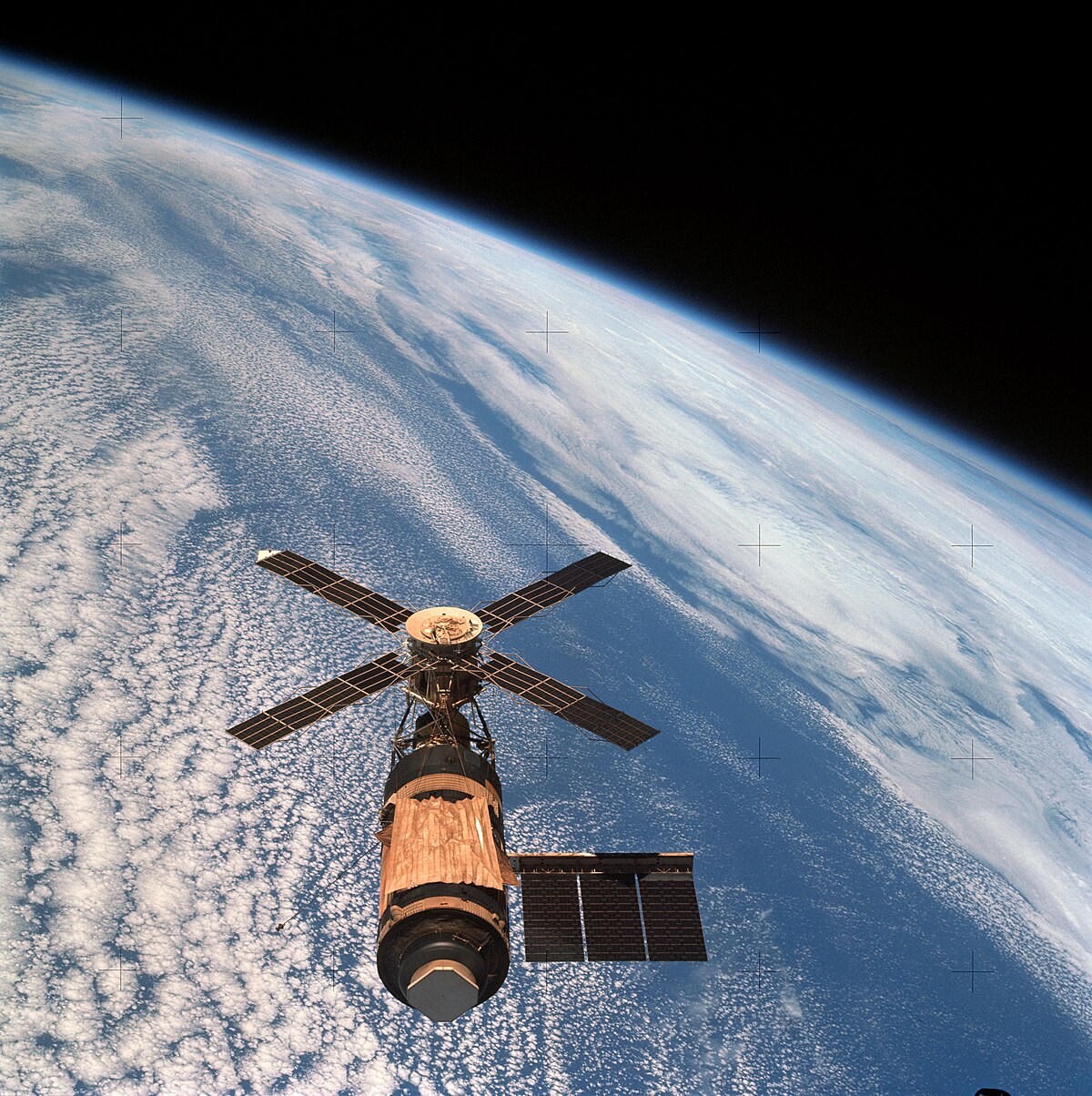
Skylab Orbital Workshop as photographed by the Skylab 4 CSM during the final fly-around by the CSM before returning home.
America's first space station in orbit
1973 Oil Crisis
The Organization of Petroleum Exporting Countries (OPEC) cut petroleum output, raising oil prices and hurting Western economies while helping the Soviet Union through increased oil sales revenue. This demonstrated the growing influence of Third World alignments.
1975 CE
Apollo-Soyuz Test Project
American and Soviet spacecraft docked in orbit for the first time, with crews shaking hands in space. This joint mission marked the symbolic end of the Space Race and the beginning of international cooperation in space exploration.

American Stafford and Russian Leonov shake hands in space aboard the Apollo–Soyuz docking adapter.
Historic handshake symbolizing the end of the Space Race
Helsinki Accords Signed
The Helsinki Accords were signed at the Conference on Security and Co-operation in Europe, with the Soviets promising to grant free elections in Europe. These agreements were part of efforts to stabilize the situation in Europe and represented a major concession by the Soviets.
Vietnam War Ends
The Vietnam War ended in defeat for the United States after lasting from 1955 to 1975. This major proxy conflict demonstrated the limits of American military power and led to a decline in US international prestige, contributing to a policy of détente.
1976 CE
Viking 1 and 2 Land on Mars
NASA successfully landed two Viking spacecraft on Mars, taking the first photographs from the Martian surface and conducting extensive scientific analysis. These missions provided detailed information about Mars and demonstrated American leadership in planetary exploration.

Surface of Mars taken by Viking 1.
First detailed photographs from the Martian surface
1979 CE
Iranian Revolution
The Iranian Revolution toppled the US-allied Shah, installing an anti-American Islamic regime. This event, along with the Nicaraguan Revolution, represented major setbacks for US influence and contributed to the deterioration of détente with the Soviet Union.

Iranian people protesting against the Pahlavi dynasty
Popular uprising that overthrew the US-allied Shah
SALT II Treaty Signed
Soviet General Secretary Leonid Brezhnev and US President Jimmy Carter signed the SALT II arms limitation treaty in Vienna. However, Carter's efforts were undermined by other events including the Iranian Revolution and Soviet invasion of Afghanistan.
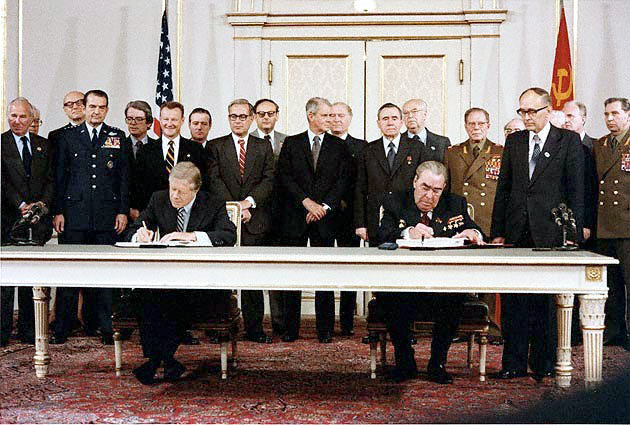
Brezhnev and Carter sign the SALT II treaty
Arms control agreement between the superpowers
Soviet Invasion of Afghanistan
Soviet special forces assassinated Afghan President Hafizullah Amin during Operation Storm-333 and installed Babrak Karmal as his successor. Soviet troops were deployed in substantial numbers, directly involving the USSR in what had been a domestic Afghan conflict.

The Soviet invasion during Operation Storm-333
Map showing Soviet military operations in Afghanistan
1980 CE
Carter's Response to Soviet Invasion
Carter responded to the Soviet invasion of Afghanistan by withdrawing the SALT II treaty, imposing embargoes, demanding increased military spending, and announcing a boycott of the 1980 Moscow Olympics. He called it 'the most serious threat to peace since World War II.'
Ronald Reagan Elected President
Ronald Reagan won the 1980 presidential election, vowing to increase military spending and confront the Soviets everywhere. Reagan labeled the Soviet Union an 'evil empire' and predicted that Communism would be left on the 'ash heap of history.'

World map of military alliances in 1980
Global alignment of forces at the start of Reagan's presidency
1981 CE
First Space Shuttle Flight
NASA's Space Shuttle Columbia completed its first orbital test flight, marking the beginning of the reusable spacecraft era. The Space Shuttle program represented a new approach to space access, though it proved more expensive and dangerous than initially planned.
Reagan Military Buildup
Reagan accelerated military spending from 5.3% of GNP in 1981 to 6.5% in 1986, the largest peacetime defense buildup in US history. He revived the B-1 bomber, produced Peacekeeper missiles, installed cruise missiles in Europe, and announced the Strategic Defense Initiative.
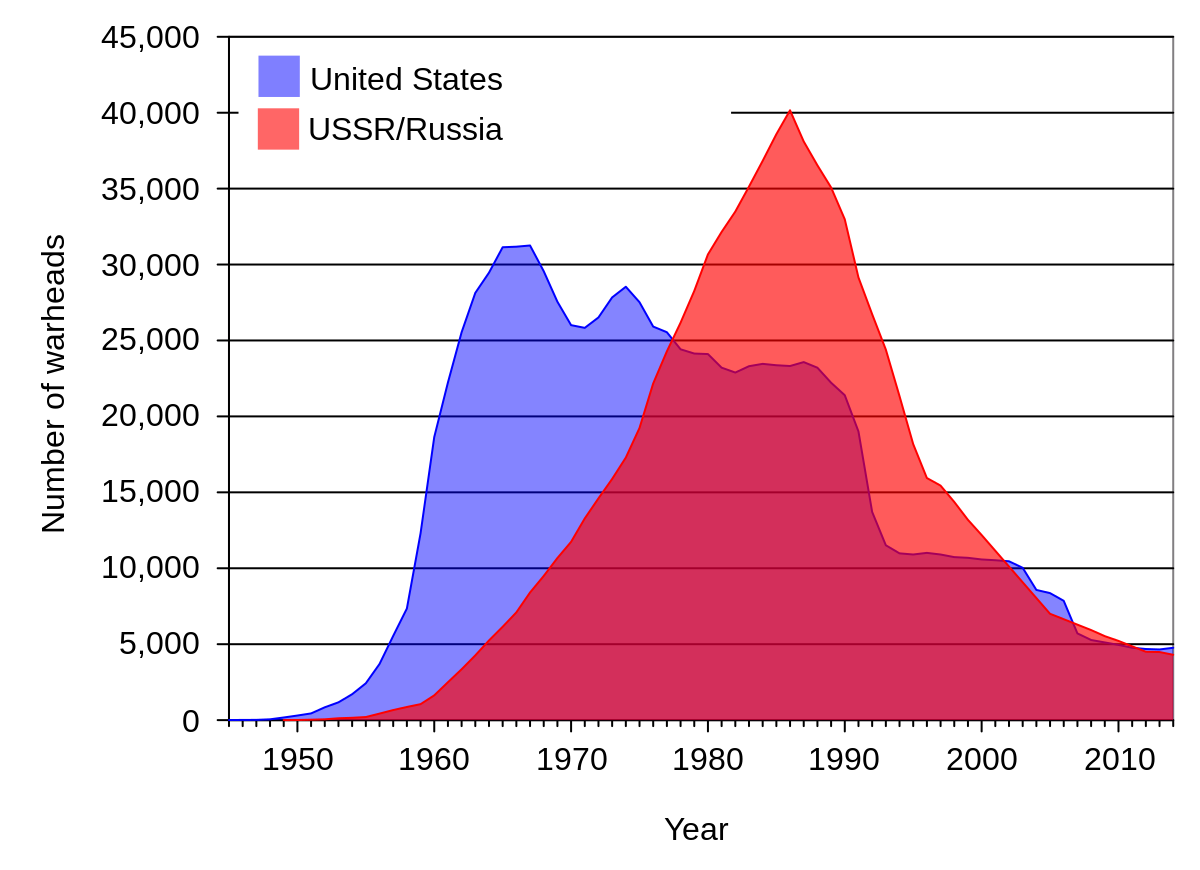
US and USSR nuclear weapons stockpiles, 1945-2006
Chart showing the nuclear arms race between superpowers
Polish Martial Law
Poland's Wojciech Jaruzelski imposed martial law in response to the Solidarity movement crisis. Reagan imposed economic sanctions on Poland in response, while the Kremlin advised against intervention for fear of economic catastrophe.

Protest in Amsterdam against deployment of Pershing II missiles
European opposition to nuclear weapons deployment
1983 CE
Sally Ride First American Woman in Space
Sally Ride became the first American woman in space aboard Space Shuttle Challenger on STS-7. Her flight marked a significant milestone in gender equality in space exploration and inspired a generation of women to pursue careers in science and technology.
Reagan Meets Afghan Mujahideen
President Reagan publicized his support by meeting with Afghan mujahideen leaders in the White House, demonstrating US backing for Islamic opponents of the Soviet Union and Soviet-backed PDPA government in Afghanistan.

President Reagan with Afghan mujahideen leaders
US support for anti-Soviet forces in Afghanistan
Korean Air Lines Flight 007 Shot Down
The Soviet Union shot down Korean Air Lines Flight 007, a Boeing 747 with 269 people aboard, including US Congressman Larry McDonald. Reagan characterized this as a massacre, and the incident increased support for military deployment and heightened tensions.
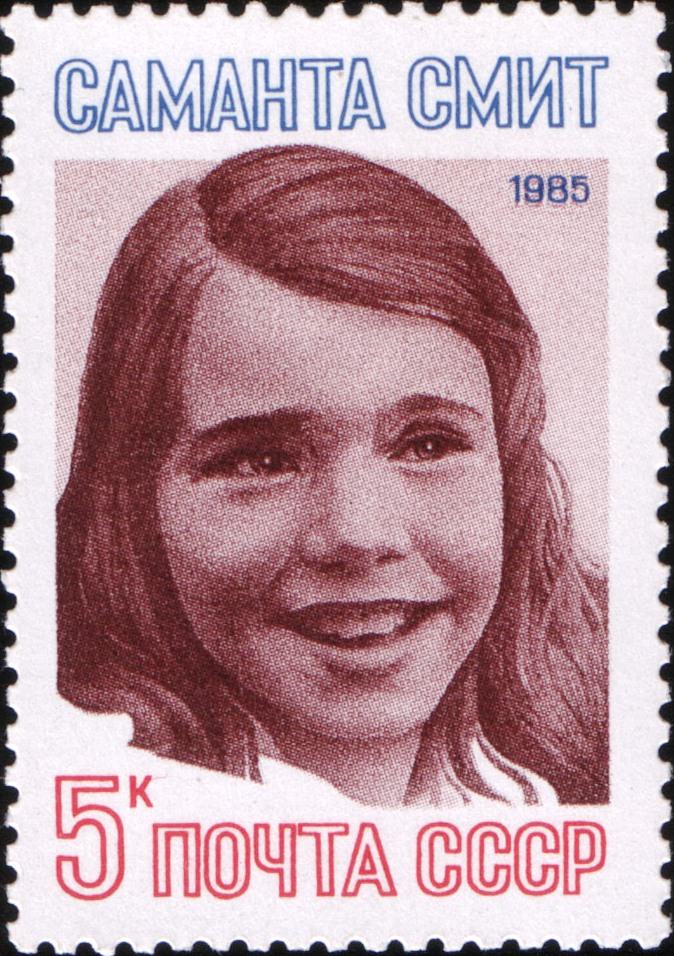
USSR stamp featuring Samantha Smith
Soviet stamp honoring American girl who wrote to Andropov about nuclear war fears
Able Archer 83 Exercise
The Able Archer 83 NATO exercise in November was a realistic simulation of coordinated nuclear release that Soviet leadership feared might be cover for an actual attack. This was perhaps the most dangerous moment since the Cuban Missile Crisis.
1985 CE
Mikhail Gorbachev Becomes Soviet Leader
Mikhail Gorbachev became General Secretary of the Soviet Union and began expanding political freedoms. His reforms of perestroika and glasnost contributed to the revolutions of 1989 in the Eastern Bloc and ultimately the collapse of the USSR.

Gorbachev in discussions with Reagan
New Soviet leader engaging with US President
Geneva Summit
The first Reagan-Gorbachev summit was held in Geneva, Switzerland, marking the beginning of renewed dialogue between the superpowers. This meeting initiated a series of summits that would lead to significant arms control agreements.
1986 CE
Mir Space Station Assembly Begins
The Soviet Union began assembling the Mir space station, which would become the largest spacecraft and maintain the longest continuous human presence in space. Mir represented the pinnacle of Soviet space station technology and international cooperation.

Salyut-7 with Kosmos1686 and Soyuz T-15 docked, truss extended, May 31, 1986
Soviet space station technology leading to Mir
Reykjavik Summit
A second Reagan-Gorbachev summit was held in Reykjavik, Iceland. Talks went well until focus shifted to Reagan's Strategic Defense Initiative, which Gorbachev wanted eliminated. Reagan refused, and negotiations failed, but groundwork was laid for future agreements.
1987 CE
Gorbachev Announces Perestroika
Gorbachev announced perestroika (restructuring), an agenda of economic reform that relaxed production quotas, allowed cooperative ownership of small businesses, and paved the way for foreign investment. This was intended to redirect resources from military to civilian sectors.
Reagan's 'Tear Down This Wall' Speech
President Reagan delivered his famous speech at the Brandenburg Gate, demanding 'Mr. Gorbachev, tear down this wall!' This speech became an iconic moment in Cold War rhetoric and symbolized Western pressure for change in the Soviet system.
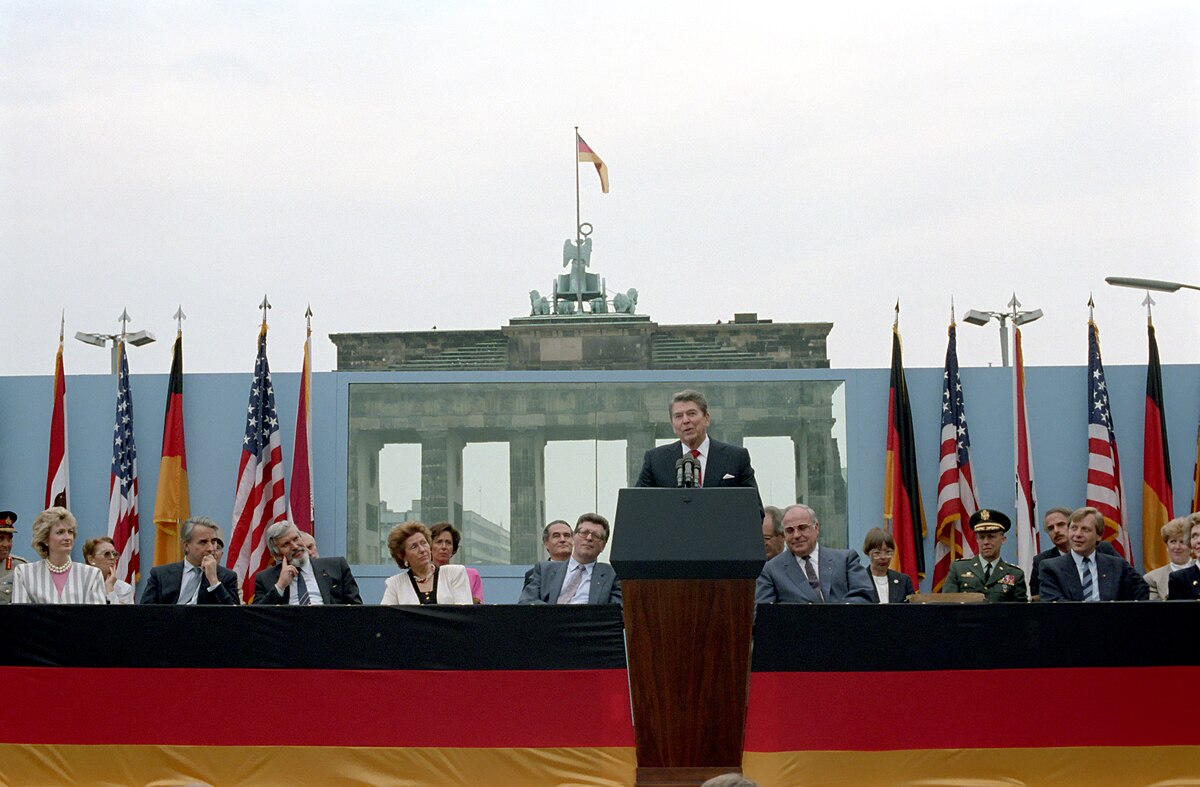
Reagan speaking in front of the Brandenburg Gate
Historic speech demanding the removal of the Berlin Wall
INF Treaty Signed
The Washington Summit led to the signing of the Intermediate-Range Nuclear Forces Treaty (INF), eliminating all nuclear-armed, ground-launched ballistic and cruise missiles with ranges between 500-5,500 kilometers and their infrastructure.

Gorbachev and Reagan sign the INF Treaty
Historic arms control agreement between superpowers
1988 CE
Buran Shuttle First Flight
The Soviet Union's Buran space shuttle completed its first and only orbital flight, flying unmanned and landing automatically. This achievement demonstrated Soviet capability to match American shuttle technology, though the program was canceled due to the USSR's collapse.

Soyuz, US Space Shuttle, and Energia-Buran
Comparison of Soviet and American reusable spacecraft
1989 CE
Soviet Withdrawal from Afghanistan
Soviet forces withdrew from Afghanistan without achieving their objectives, ending a costly nine-year intervention. This withdrawal demonstrated the limits of Soviet military power and contributed to the decline of Soviet influence globally.
Revolutions of 1989
The 1989 revolutionary wave swept across Central and Eastern Europe, peacefully overthrowing Soviet-style governments in East Germany, Poland, Hungary, Czechoslovakia, and Bulgaria. Romania was the only country to topple its regime violently.

East German leader Erich Honecker
Communist leader who lost control during the 1989 revolutions
Pan-European Picnic
The Pan-European Picnic took place on the Hungarian-Austrian border, starting a peaceful movement that Eastern Bloc rulers could not stop. This event led to the largest movement of refugees from East Germany since 1961 and ultimately brought about the fall of the Iron Curtain.
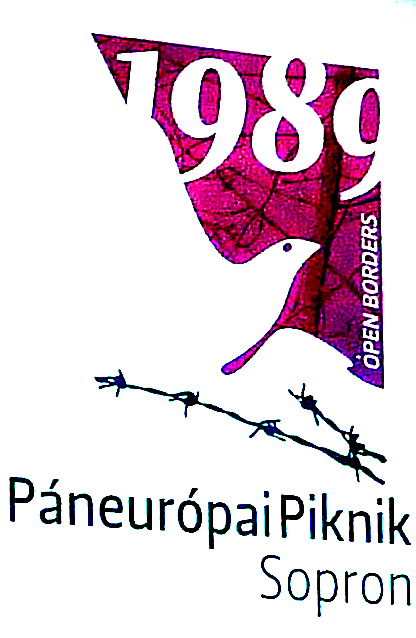
The Pan-European Picnic memorial site
Location of the event that helped bring down the Iron Curtain
Baltic Way Human Chain
A human chain formed in Lithuania during the Baltic Way demonstration, as Baltic states began their independence movements. This peaceful protest symbolized the growing desire for freedom from Soviet control in the Baltic republics.

The human chain in Lithuania during the Baltic Way
Peaceful demonstration for Baltic independence
Fall of the Berlin Wall
The Berlin Wall fell in November 1989, symbolizing the collapse of European communist governments and graphically ending the Iron Curtain divide of Europe. This event marked the beginning of German reunification and the end of the Cold War division.
Malta Summit - Cold War Declared Over
Gorbachev and Bush declared the Cold War over at the Malta Summit. This meeting officially marked the end of the ideological and geopolitical confrontation that had defined international relations for over four decades.

The beginning of the 1990s brought a thaw in relations
Bush and Gorbachev meeting as the Cold War ended
1990 CE
Lithuania Declares Independence
Lithuania declared its independence restored, citing the illegality of Soviet occupation of the Baltic states. This was the first Soviet republic to declare independence, beginning the process of Soviet dissolution.
German Reunification Treaty
Gorbachev agreed to the Treaty on the Final Settlement with Respect to Germany, paving the way for German reunification. This formally ended the post-war division of Germany and represented a major victory for Western diplomacy.
1991 CE
Soviet Union Collapses
The collapse of the Soviet Union effectively ended the Space Race as a competition between superpowers. The Russian Federation inherited most Soviet space assets, leading to increased cooperation with the United States in space exploration.
START I Treaty Signed
During the final summit in Moscow, Gorbachev and Bush signed the START I arms control treaty, representing continued cooperation between the superpowers even as the Soviet Union was dissolving.
August Coup Attempt
Hardline members of the Soviet government and KGB attempted a coup to reverse Gorbachev's reforms and reassert central control. The coup collapsed, effectively ending Gorbachev's power and accelerating the dissolution of the Soviet Union.

August Coup in Moscow, 1991
Failed coup attempt that accelerated Soviet collapse
Soviet Union Dissolves
The USSR officially dissolved on December 25, 1991, when Gorbachev resigned as President. Fifteen independent states emerged, with Russia assuming the Soviet Union's UN membership, nuclear stockpile, and international obligations, formally ending the Cold War.

The first Russian McDonald's on Moscow's Pushkin Square
Symbol of Western capitalism entering the former Soviet Union