Comparing Timelines
Exploring the overlapping histories of "Space Race" and "World War II".

Space Race
1921 - 1991

World War II
1931 - 1945
1921 CE
Soviet Gas Dynamics Laboratory Established
The Soviet military sanctioned the Gas Dynamics Laboratory, a small research laboratory to explore solid-fuel rockets, led by Nikolai Tikhomirov. This marked the beginning of organized Soviet rocket development efforts.
1928 CE
First Soviet Solid Fuel Rocket Test
The first test-firing of a solid fuel rocket was carried out by the Soviet Gas Dynamics Laboratory. This represented an early milestone in Soviet rocket technology development.
1931 CE
Japanese Invasion of Manchuria
Japan staged the Mukden incident as a pretext to invade Manchuria and establish the puppet state of Manchukuo. This marked the beginning of Japanese expansion in Asia and is considered by some historians as the true start of World War II. The invasion demonstrated Japan's militaristic ambitions and set the stage for future conflicts in the Pacific.
1933 CE
First Soviet Liquid-Fueled Rocket Launch
Soviet rocket pioneers Sergey Korolev, Friedrich Zander, Mikhail Tikhonravov and Leonid Dushkin launched GIRD-X, the first Soviet liquid-fueled rocket. This achievement demonstrated Soviet progress in advanced rocket technology.
1935 CE
Italian Invasion of Ethiopia
The Second Italo-Ethiopian War began with Italy's invasion of Ethiopia, launched from Italian Somaliland and Eritrea. The war exposed the weakness of the League of Nations and resulted in Ethiopia's annexation into Italian East Africa. This colonial war demonstrated the ineffectiveness of international peacekeeping efforts.
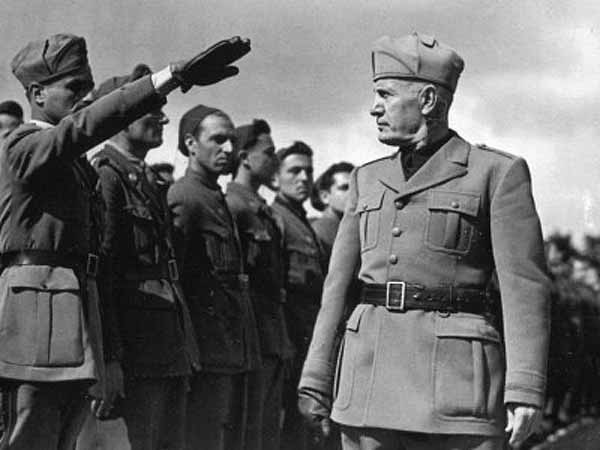
Benito Mussolini inspecting troops during the Italo-Ethiopian War, 1935
Benito Mussolini inspecting troops during the Italo-Ethiopian War, 1935
1936 CE
Soviet Rocket Development Damaged by Great Purge
Joseph Stalin's Great Purge severely damaged Soviet rocket technology progress. Many scientists and engineers were imprisoned or executed, setting back the Soviet rocket program significantly.
Spanish Civil War Begins
Civil war broke out in Spain, with Hitler and Mussolini supporting the Nationalist rebels led by Francisco Franco, while the Soviet Union backed the Spanish Republic. This conflict served as a testing ground for new military tactics and weapons that would later be used in World War II.
1937 CE
Marco Polo Bridge Incident
Japan captured Beijing after instigating the Marco Polo Bridge incident, which escalated into the Second Sino-Japanese War. This marked the beginning of full-scale warfare between Japan and China, opening a major theater of what would become World War II in Asia.

Imperial Japanese Army soldiers during the Battle of Shanghai, 1937
Imperial Japanese Army soldiers during the Battle of Shanghai, 1937
Nanjing Massacre
After capturing the Chinese capital of Nanking, Japanese forces committed mass atrocities against Chinese civilians and disarmed combatants. Tens or hundreds of thousands were murdered in what became known as the Nanjing Massacre, one of the most infamous war crimes of the conflict.
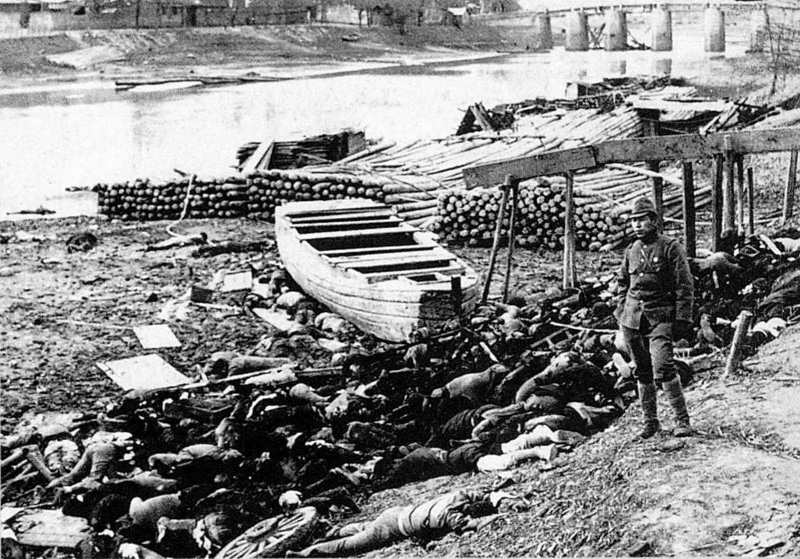
Bodies of Chinese civilians killed by the Imperial Japanese Army during the Nanjing Massacre in December 1937
Bodies of Chinese civilians killed by the Imperial Japanese Army during the Nanjing Massacre in December 1937
1938 CE
German Annexation of Austria
Germany annexed Austria in the Anschluss, encountering little resistance from other European powers. This violation of the Treaty of Versailles demonstrated the policy of appeasement and encouraged Hitler to make further territorial demands in Europe.
Munich Agreement
The United Kingdom and France agreed to Germany's annexation of the Sudetenland from Czechoslovakia in exchange for Hitler's promise of no further territorial demands. This agreement, made without Czechoslovak consent, epitomized the failed policy of appeasement.

Chamberlain, Daladier, Hitler, Mussolini, and Ciano pictured just before signing the Munich Agreement, 29 September 1938
Chamberlain, Daladier, Hitler, Mussolini, and Ciano pictured just before signing the Munich Agreement, 29 September 1938
1939 CE
German Invasion of Czechoslovakia
Germany invaded and occupied the remainder of Czechoslovakia, breaking the Munich Agreement and demonstrating that Hitler's territorial ambitions extended beyond ethnic German areas. This action finally convinced Britain and France that appeasement had failed.
Molotov-Ribbentrop Pact
The Soviet Union and Nazi Germany signed a non-aggression pact with secret protocols dividing Poland and Eastern Europe into spheres of influence. This agreement shocked the world and cleared the way for Germany to invade Poland without fear of a two-front war.
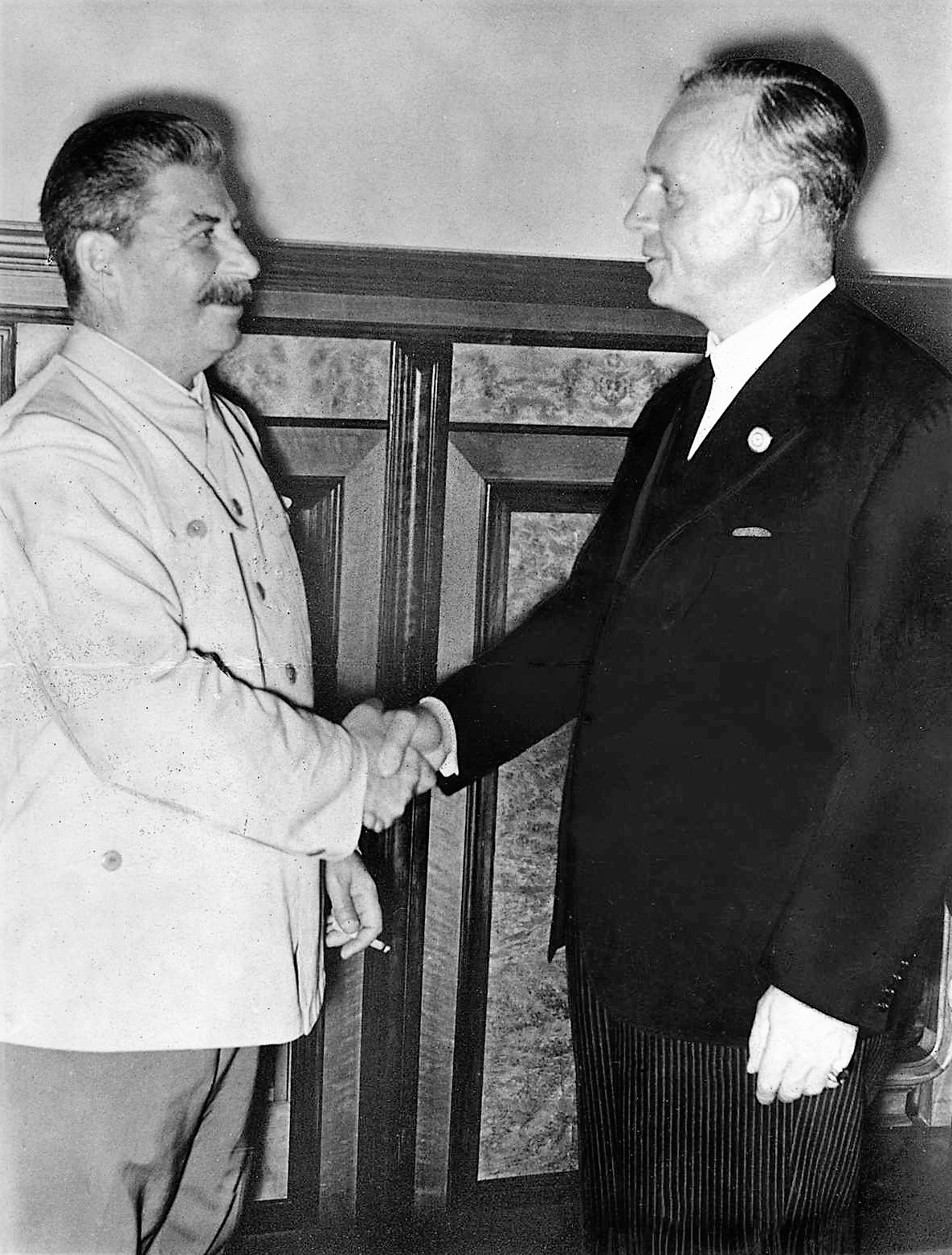
German Foreign Minister Joachim von Ribbentrop (right) and the Soviet leader Joseph Stalin, after signing the Molotov–Ribbentrop Pact, 23 August 1939
German Foreign Minister Joachim von Ribbentrop (right) and the Soviet leader Joseph Stalin, after signing the Molotov–Ribbentrop Pact, 23 August 1939
German Invasion of Poland
Nazi Germany invaded Poland, marking the official beginning of World War II in Europe. The attack on Polish defenses at Westerplatte was the first military action of the war. Britain and France declared war on Germany two days later, honoring their guarantees to Poland.

A German propaganda photograph reenacting the removal of the Polish border crossing in Sopot
A German propaganda photograph reenacting the removal of the Polish border crossing in Sopot
Britain and France Declare War on Germany
Following Germany's invasion of Poland and the expiration of their ultimatum, Britain and France formally declared war on Germany. This marked the beginning of the global conflict, though the Western Allies provided little immediate military support to Poland during the 'Phoney War' period.
Soviet Invasion of Poland
The Soviet Union invaded Poland from the east, implementing the secret protocol of the Molotov-Ribbentrop Pact. This two-front attack sealed Poland's fate and resulted in the country being divided between Germany and the Soviet Union.
Soviet Invasion of Finland
The Soviet Union invaded Finland after Finland refused to cede territory and sign a pact allowing Soviet military bases. Despite overwhelming numerical superiority, Soviet military success was modest during the Winter War, which ended in March 1940 with limited Finnish territorial concessions.
1940 CE
End of Winter War
The Winter War between Finland and the Soviet Union ended with the Moscow Peace Treaty. Finland was forced to cede territory including the Karelian Isthmus, but maintained its independence. The war demonstrated Soviet military weaknesses and Finnish resilience.
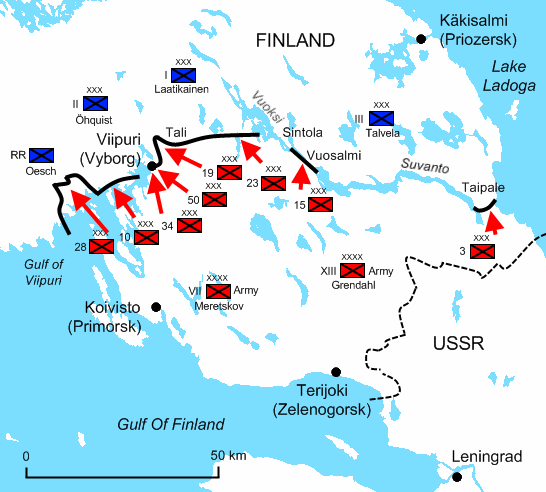
Mannerheim Line and Karelian Isthmus on the last day of the Winter War, 13 March 1940
Mannerheim Line and Karelian Isthmus on the last day of the Winter War, 13 March 1940
German Invasion of Denmark and Norway
Germany launched Operation Weserübung, invading Denmark and Norway to secure iron ore shipments from Sweden and prevent Allied interference. Denmark capitulated within hours, while Norway fell after two months despite Allied support, leading to Chamberlain's resignation.
Churchill Becomes Prime Minister
Winston Churchill replaced Neville Chamberlain as British Prime Minister following the failed Norwegian campaign. Churchill's appointment marked a shift toward more aggressive prosecution of the war and his leadership would prove crucial during Britain's darkest hours.
German Offensive in Western Europe
Germany launched its offensive against France, Belgium, Netherlands, and Luxembourg, circumventing the Maginot Line through the Ardennes. Using innovative Blitzkrieg tactics, German forces rapidly advanced to the English Channel, trapping Allied forces and leading to the Dunkirk evacuation.

German advance into Belgium and Northern France, 10 May4 June 1940, sweeping past the Maginot Line (shown in dark red)
German advance into Belgium and Northern France, 10 May4 June 1940, sweeping past the Maginot Line (shown in dark red)
Italy Declares War
Italy declared war on Britain and France and invaded southern France. Mussolini's entry into the war opened new fronts in the Mediterranean, North Africa, and East Africa, significantly expanding the scope of the conflict.
Fall of Paris
German forces captured Paris, the French capital, after the collapse of French resistance. The fall of Paris symbolized the defeat of France and led to the armistice that divided France into German-occupied and Vichy-controlled zones.
French Armistice
France signed an armistice with Germany, ending active French resistance. The agreement divided France into German-occupied zones and the nominally independent Vichy regime under Marshal Pétain, effectively removing France as an Allied power.
Battle of Britain Begins
The German Luftwaffe began its air campaign against Britain, initially targeting shipping and harbors before focusing on achieving air superiority. The failure to defeat RAF Fighter Command forced the indefinite postponement of the planned German invasion of Britain.
The Blitz Begins
Germany intensified its strategic bombing campaign against British cities, particularly London, in what became known as the Blitz. Despite causing significant civilian casualties and damage, the bombing failed to break British morale or significantly disrupt the war effort.
Tripartite Pact Signed
Japan, Italy, and Germany formally united as the Axis powers by signing the Tripartite Pact. The agreement stipulated that any country attacking one Axis power would face war with all three, creating a global military alliance opposing the Allies.
Italy Invades Greece
Italy launched an invasion of Greece from Albania, but the attack was repulsed with heavy Italian casualties. The failed invasion forced Germany to intervene in the Balkans to assist its ally, delaying the planned invasion of the Soviet Union.
1941 CE
Operation Barbarossa Begins
Germany launched the largest military operation in history, invading the Soviet Union with over 3 million troops along an 1,800-mile front. The surprise attack initially achieved massive territorial gains but ultimately failed to achieve its objectives before winter, marking the beginning of Germany's two-front war.
European theatre of World War II animation map, 1939–1945 – Red: Western Allies and the Soviet Union after 1941; Green: Soviet Union before 1941; Blue: Axis powers
European theatre of World War II animation map, 1939–1945 – Red: Western Allies and the Soviet Union after 1941; Green: Soviet Union before 1941; Blue: Axis powers
Pearl Harbor Attack
Japan launched a surprise attack on the US Pacific Fleet at Pearl Harbor, Hawaii, sinking or damaging 18 warships and killing over 2,400 Americans. The attack brought the United States into World War II and transformed the conflict into a truly global war.

The was a total loss in the Japanese surprise air attack on the United States Pacific Fleet at Pearl Harbor, Sunday 7 December 1941
The was a total loss in the Japanese surprise air attack on the United States Pacific Fleet at Pearl Harbor, Sunday 7 December 1941
Germany Declares War on United States
Following Pearl Harbor, Germany and the other Axis powers declared war on the United States in solidarity with Japan. This decision brought America's full industrial and military might into the European theater, fundamentally altering the balance of power.
1942 CE
Battle of Midway
The US Navy decisively defeated the Japanese fleet at Midway Atoll, sinking four aircraft carriers and destroying much of Japan's experienced naval aviation force. This victory marked the turning point in the Pacific War, ending Japanese expansion and beginning their long retreat.
Battle of Stalingrad Begins
German forces began their assault on Stalingrad, leading to one of the most brutal and decisive battles of the war. The battle would rage for months in devastating urban combat, ultimately resulting in the encirclement and destruction of the German Sixth Army.

Red Army soldiers on the counterattack during the Battle of Stalingrad, February 1943
Red Army soldiers on the counterattack during the Battle of Stalingrad, February 1943
1943 CE
German Surrender at Stalingrad
The German Sixth Army surrendered at Stalingrad after being encircled by Soviet forces. The defeat marked the first major German surrender and the beginning of their long retreat on the Eastern Front. Over 200,000 German and Axis soldiers were killed or captured.
Battle of Kursk
Germany launched Operation Citadel, its last major offensive on the Eastern Front, attempting to eliminate the Soviet salient at Kursk. The massive tank battle ended in German defeat, marking the end of German strategic initiative in the east and beginning the Soviet advance toward Berlin.
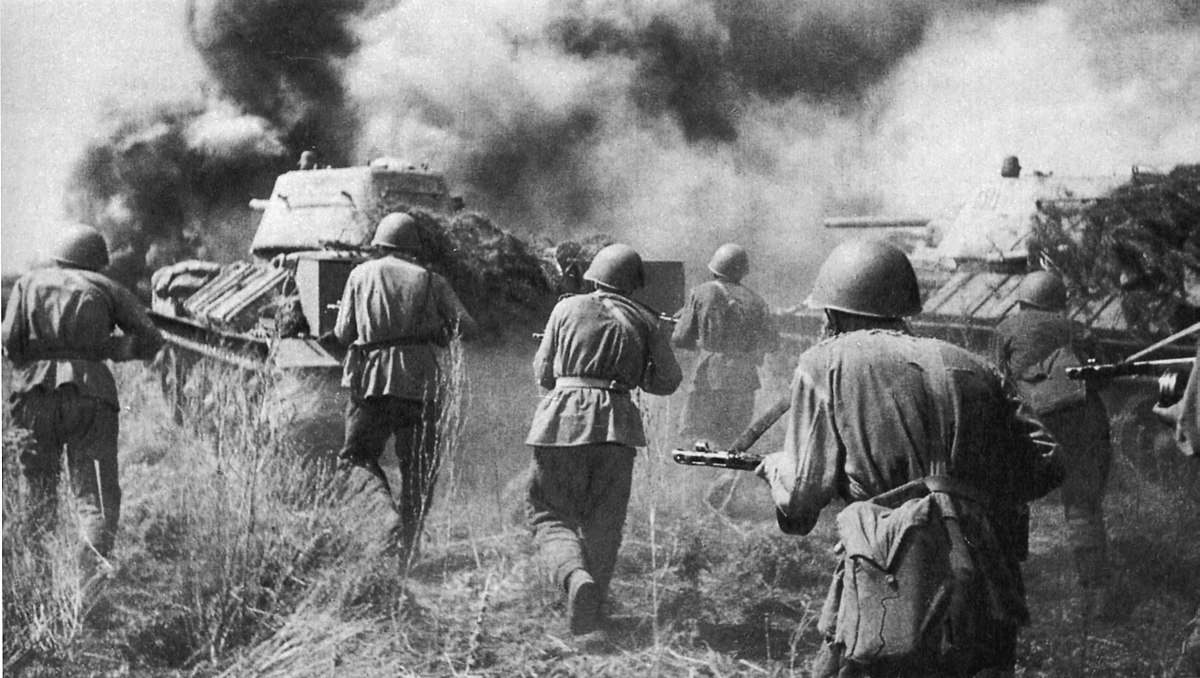
Red Army troops in a counter-offensive on German positions at the Battle of Kursk, July 1943
Red Army troops in a counter-offensive on German positions at the Battle of Kursk, July 1943
Allied Invasion of Sicily
Allied forces launched Operation Husky, the invasion of Sicily, opening the Italian campaign. The successful invasion led to Mussolini's fall from power and Italy's eventual surrender, though German resistance continued in Italy for nearly two more years.
Italy Surrenders
Italy signed an armistice with the Allies, effectively surrendering and switching sides in the war. However, German forces quickly occupied much of Italy and established defensive lines, leading to a prolonged and costly Italian campaign for the Allies.
1944 CE
D-Day Normandy Landings
Allied forces launched Operation Overlord, the largest amphibious invasion in history, landing on the beaches of Normandy, France. The successful establishment of a second front in Western Europe marked the beginning of the liberation of Nazi-occupied Western Europe.

American troops approaching Omaha Beach during the invasion of Normandy on D-Day, 6 June 1944
American troops approaching Omaha Beach during the invasion of Normandy on D-Day, 6 June 1944
Operation Bagration
The Soviet Union launched Operation Bagration, a massive offensive that destroyed German Army Group Center and liberated Belarus. The operation was one of the most successful Soviet offensives, advancing 450 miles in five weeks and opening the path to Poland and Germany.
Liberation of Paris
Allied forces liberated Paris from German occupation, with the French Resistance and Free French Forces playing key roles. The liberation of the French capital was a powerful symbol of Nazi Germany's declining fortunes and the success of the Allied advance in Western Europe.
Battle of Leyte Gulf
The largest naval battle in history took place in the Philippines as American forces returned to liberate the islands. The decisive Allied victory effectively ended the Japanese Navy as an offensive force and secured American control of the Pacific sea lanes.

General Douglas MacArthur returns to the Philippines during the Battle of Leyte, 20 October 1944
General Douglas MacArthur returns to the Philippines during the Battle of Leyte, 20 October 1944
Battle of the Bulge
Germany launched its last major offensive in the west, attempting to split Allied forces in the Ardennes. Despite initial success and creating a 'bulge' in Allied lines, the offensive failed to achieve its strategic objectives and depleted Germany's remaining reserves.
1945 CE
Yalta Conference
Roosevelt, Churchill, and Stalin met to discuss the post-war reorganization of Europe and the final phase of the war against Japan. The conference established occupation zones for Germany and secured Soviet agreement to enter the war against Japan within three months of Germany's defeat.

Yalta Conference held in February 1945, with Winston Churchill, Franklin D. Roosevelt, and Joseph Stalin
Yalta Conference held in February 1945, with Winston Churchill, Franklin D. Roosevelt, and Joseph Stalin
Death of Franklin D. Roosevelt
President Franklin D. Roosevelt died and was succeeded by Vice President Harry S. Truman. Roosevelt's death removed one of the key Allied leaders just months before the end of the war, and Truman would face crucial decisions about the use of atomic weapons and post-war relations with the Soviet Union.
Death of Adolf Hitler
Adolf Hitler committed suicide in his Berlin bunker as Soviet forces closed in on the Nazi capital. His death effectively ended Nazi resistance and paved the way for Germany's unconditional surrender, though fighting continued for several more days.
Germany Surrenders
Germany signed an unconditional surrender, officially ending the war in Europe. The surrender was signed in Berlin and took effect on May 8, 1945, which became known as Victory in Europe (VE) Day. The Nazi regime was completely defeated after nearly six years of war.
Atomic Bombing of Hiroshima
The United States dropped the first atomic bomb on Hiroshima, Japan, killing approximately 80,000 people instantly and many more from radiation effects. This marked the first use of nuclear weapons in warfare and demonstrated the devastating power of atomic technology.
Soviet Invasion of Manchuria
The Soviet Union declared war on Japan and launched a massive invasion of Japanese-held Manchuria, quickly defeating the Kwantung Army. This invasion, combined with the atomic bombings, convinced Japanese leaders that continued resistance was futile.
Atomic Bombing of Nagasaki
The United States dropped a second atomic bomb on Nagasaki, Japan, killing approximately 40,000 people instantly. The second bombing, combined with the Soviet invasion of Manchuria, finally convinced Emperor Hirohito to surrender unconditionally.
Japan Announces Surrender
Emperor Hirohito announced Japan's surrender in a radio broadcast to the Japanese people, citing the enemy's use of 'a new and most cruel bomb' and the Soviet entry into the war. This announcement effectively ended World War II, though the formal surrender ceremony would follow.
Japanese Formal Surrender
Japan formally surrendered aboard the USS Missouri in Tokyo Bay, officially ending World War II. The ceremony was attended by representatives of all Allied nations and marked the complete victory over the Axis powers after six years of global warfare.

Japanese foreign affairs minister Mamoru Shigemitsu signs the Japanese Instrument of Surrender on board , 2 September 1945
Japanese foreign affairs minister Mamoru Shigemitsu signs the Japanese Instrument of Surrender on board , 2 September 1945
1949 CE
First Mammal in Space
Albert II, a rhesus monkey, became the first mammal in space when launched by the US on a sub-orbital flight. The monkey died on landing due to a parachute malfunction, but the mission demonstrated the possibility of sending living creatures to space.
Soviet Union Becomes Second Nuclear Power
The Soviet Union became the second nuclear power after the United States with the successful RDS-1 nuclear weapon test. This achievement intensified the Cold War arms race and provided the backdrop for the space competition.
1950 CE
Soviet R-1 Rocket Enters Service
The R-1, a Soviet copy of the German A-4 (V-2) rocket, entered service in the Soviet Army. This marked the beginning of operational Soviet ballistic missile capability.
1951 CE
Public Interest in Space Travel Sparked
Soviet rocketry engineer Mikhail Tikhonravov published 'Flight to the Moon' in the newspaper Pionerskaya pravda, describing a two-person interplanetary spaceship. This article sparked public interest in space travel and predicted space flight within 10-15 years.
1955 CE
US Announces Intent to Launch Satellites
James C. Hagerty, President Eisenhower's press secretary, announced that the United States intended to launch 'small Earth circling satellites' as part of the International Geophysical Year. This announcement marked the official beginning of the Space Race.
Soviet Union Responds to US Satellite Announcement
At the Sixth Congress of the International Astronautical Federation in Copenhagen, Soviet scientist Leonid I. Sedov announced the Soviet Union's intention to launch a satellite 'in the near future.' This response escalated the space competition.
Soviet Space Commission Established
Sergei Korolev succeeded in convincing the Soviet Academy of Sciences to establish a commission dedicated to achieving the goal of launching a satellite into Earth orbit before the United States. This can be viewed as the de facto start date of the space race.
1957 CE
R-7 ICBM First Successful Flight
The Soviet R-7 Semyorka flew 6,000 km and became the world's first intercontinental ballistic missile. This achievement gave the USSR the capability to strike US territory with nuclear weapons and provided the launch vehicle for future space missions.

The Soviet stable of Sputnik, Vostok, Voskhod, and Soyuz launch vehicles were all derivatives of the R-7 Semyorka ICBM.
The R-7 became the basis for the Soviet space program
Sputnik 1 Launched
The Soviet Union launched Sputnik 1, the first artificial satellite, into Earth orbit. This achievement shocked the world and marked the beginning of the Space Age, giving the USSR an early lead in the Space Race.

Soviet stamp commemorating Sputnik 1, 1957
Soviet commemorative stamp celebrating the first artificial satellite
Sputnik 2 Launches with Laika
The Soviet Union launched Sputnik 2 carrying Laika, a dog, making her the first animal to orbit Earth. The mission demonstrated that living creatures could survive in space, though Laika died from stress and overheating during the flight.

Laika on a Romanian post stamp
Commemorative stamp honoring Laika, the first animal in orbit
Project Vanguard Launch Failure
The US Project Vanguard launch failed spectacularly at Cape Canaveral, exploding seconds after launch. The failure became an international joke with nicknames like 'Flopnik' and 'Kaputnik,' highlighting American struggles to match Soviet space achievements.
1958 CE
Explorer 1 Launched
The United States successfully launched Explorer 1, its first satellite, on a Juno I rocket. The satellite discovered the Van Allen radiation belt, marking America's first major scientific achievement in space and its entry into the Space Race.

William Hayward Pickering, James Van Allen, and von Braun display a model of Explorer 1 at a news conference after confirmation the satellite was in orbit.
Key figures celebrating America's first satellite success
NASA Established
President Eisenhower signed the National Aeronautics and Space Act, creating NASA from the National Advisory Committee on Aeronautics. This established a civilian space agency to coordinate America's space efforts and compete with the Soviet Union.
1959 CE
Luna 1 Launched
The Soviet Union launched Luna 1, the first spacecraft to reach the vicinity of the Moon, though it missed its target. This mission marked the beginning of lunar exploration and demonstrated Soviet capability for deep space missions.
Luna 2 Impacts Moon
Luna 2 became the first human-made object to reach the Moon when it successfully impacted the lunar surface. This achievement gave the Soviet Union another space first and demonstrated their growing capability in space exploration.
Luna 3 Photographs Far Side of Moon
Luna 3 successfully flew by the Moon and transmitted the first pictures of its far side. This historic achievement provided humanity's first glimpse of the Moon's hidden hemisphere and demonstrated advanced Soviet space technology.

The first photo of the far side of the Moon, taken by Luna 3
Historic first image of the Moon's far side
1961 CE
Yuri Gagarin First Human in Space
Soviet cosmonaut Yuri Gagarin became the first human to orbit Earth aboard Vostok 1, completing a 108-minute flight. This achievement shocked the world and gave the Soviet Union a major victory in the Space Race, prompting the US to accelerate its space program.

A 1964 Stamp with Yuri Gagarin, and an intentionally inaccurate Vostok
Soviet commemorative stamp celebrating Gagarin's historic flight
Alan Shepard First American in Space
Alan Shepard became the first American in space with a suborbital flight on Mercury-Redstone 3 (Freedom 7). Though not achieving orbit like Gagarin, Shepard demonstrated manual spacecraft control and marked America's entry into human spaceflight.

Alan Shepard, the first American in space, 1961
Alan Shepard preparing for his historic suborbital flight
Kennedy Announces Moon Landing Goal
President John F. Kennedy announced the goal of landing a man on the Moon and returning him safely to Earth before the end of the decade. This bold commitment transformed the Space Race and focused American efforts on the lunar landing mission.
1962 CE
John Glenn First American to Orbit Earth
Astronaut John Glenn became the first American to orbit Earth, completing three orbits in Friendship 7. This achievement helped restore American confidence in the Space Race and demonstrated that the US could match Soviet orbital capabilities.
Mariner 2 First Successful Interplanetary Mission
NASA's Mariner 2 became the first spacecraft to successfully fly by another planet when it passed Venus. This achievement marked the beginning of interplanetary exploration and demonstrated American capability in deep space missions.
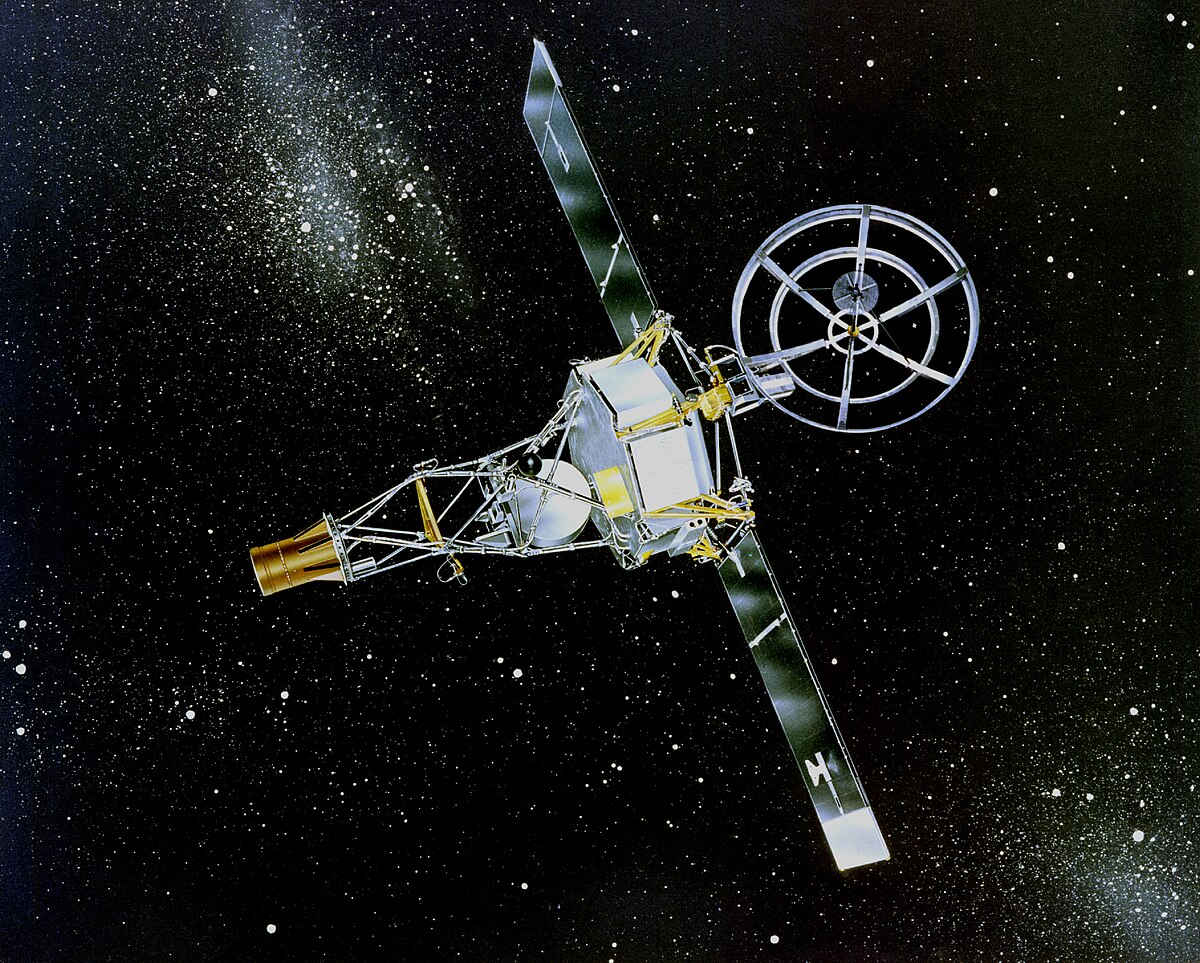
Artist's impression of Mariner 2, the first successful interplanetary spacecraft
Mariner 2 pioneered interplanetary exploration
1963 CE
Valentina Tereshkova First Woman in Space
Soviet cosmonaut Valentina Tereshkova became the first woman in space aboard Vostok 6. Her three-day mission demonstrated that women could perform effectively in space and gave the Soviet Union another space first.
1964 CE
Voskhod 1 First Multi-Person Crew
The Soviet Union launched Voskhod 1 with a three-person crew, achieving the first spaceflight with multiple crew members. This mission beat the American Gemini program to this milestone and demonstrated Soviet spacecraft capabilities.
1965 CE
Alexei Leonov First Spacewalk
Soviet cosmonaut Alexei Leonov performed the first extravehicular activity (spacewalk) during the Voskhod 2 mission. This 12-minute spacewalk demonstrated human capability to work outside spacecraft, though Leonov nearly died when his spacesuit expanded.
Gemini 6 and 7 First Space Rendezvous
Gemini 6A and Gemini 7 achieved the first rendezvous between two crewed spacecraft, coming within one foot of each other. This achievement demonstrated critical technology needed for lunar missions and marked a turning point in American space capabilities.

Rendezvous of Gemini 6 and 7, December 1965
Historic first rendezvous between two crewed spacecraft
1966 CE
Luna 9 First Soft Moon Landing
Luna 9 achieved the first soft landing on the Moon and successfully transmitted photography from the lunar surface. This achievement demonstrated that spacecraft could safely land on the Moon and provided the first close-up images of the lunar surface.

First photo of the surface of the Moon, taken by Luna 9
Historic first photograph from the Moon's surface
Venera 3 First Impact on Another Planet
Venera 3 became the first human-made object to impact another planet when it crashed on Venus. Though contact was lost before impact, this mission marked the beginning of planetary exploration and demonstrated Soviet deep space capabilities.
1967 CE
Apollo 1 Fire Kills Three Astronauts
A fire during a ground test of Apollo 1 killed astronauts Gus Grissom, Ed White, and Roger Chaffee. This tragedy led to major safety improvements in the Apollo program and delayed the first crewed Apollo mission by nearly two years.

Charred interior of the Apollo 1 spacecraft after the fire that killed the crew
The tragic aftermath of the Apollo 1 fire
Outer Space Treaty Signed
The United States, Soviet Union, and United Kingdom signed the Treaty on Principles Governing the Activities of States in the Exploration and Use of Outer Space. This treaty established space as the common heritage of mankind and prohibited weapons of mass destruction in space.
Vladimir Komarov Dies in Soyuz 1
Soviet cosmonaut Vladimir Komarov became the first in-flight spaceflight fatality when Soyuz 1's parachute system failed during reentry. This tragedy highlighted the dangers of space exploration and led to improvements in Soviet spacecraft design.

The remains of Vladimir Komarov
The tragic end of the first in-flight space fatality
1968 CE
Apollo 8 First Humans to Leave Earth Orbit
Apollo 8 carried Frank Borman, James Lovell, and William Anders on the first crewed mission to leave Earth orbit and travel to the Moon. Their Christmas Eve broadcast from lunar orbit was one of the most watched TV programs in history.

Earthrise, as seen from Apollo 8, December 24, 1968 (photograph by astronaut William Anders)
The iconic Earthrise photograph taken during Apollo 8
1969 CE
Apollo 11 Moon Landing
Neil Armstrong and Buzz Aldrin became the first humans to land on the Moon while Michael Collins orbited above. Armstrong's first steps on the lunar surface were watched by an estimated 723 million people worldwide, marking America's victory in the Space Race.
"Buzz" Aldrin facing away from Camera, with the Apollo 11 Lunar Lander
Iconic image of Buzz Aldrin on the Moon's surface
1970 CE
Venera 7 First Data from Another Planet's Surface
Soviet Venera 7 became the first spacecraft to successfully transmit data from the surface of another planet. The probe measured Venus's surface temperature at 475°C and atmospheric pressure at 92 bars, providing crucial data about Venus's hostile environment.
Luna 16 First Robotic Sample Return
Luna 16 became the first uncrewed spacecraft to return samples from the Moon to Earth. This achievement demonstrated that robotic missions could accomplish complex tasks and provided an alternative to crewed lunar exploration.
1971 CE
Mars 2 First Object to Impact Mars
Soviet Mars 2 became the first human-made object to impact Mars, though the lander crashed and was destroyed. This mission marked the beginning of Mars exploration and demonstrated the challenges of landing on the Red Planet.
Salyut 1 First Space Station
The Soviet Union launched Salyut 1, the world's first space station. Though the first crew died during reentry due to cabin depressurization, this achievement marked the beginning of long-duration spaceflight and orbital laboratories.
1973 CE
Skylab Launched
The United States launched Skylab, its first and only space station, using a Saturn V rocket. Despite initial damage during launch, Skylab hosted three crews and conducted valuable scientific research, demonstrating American capability in long-duration spaceflight.
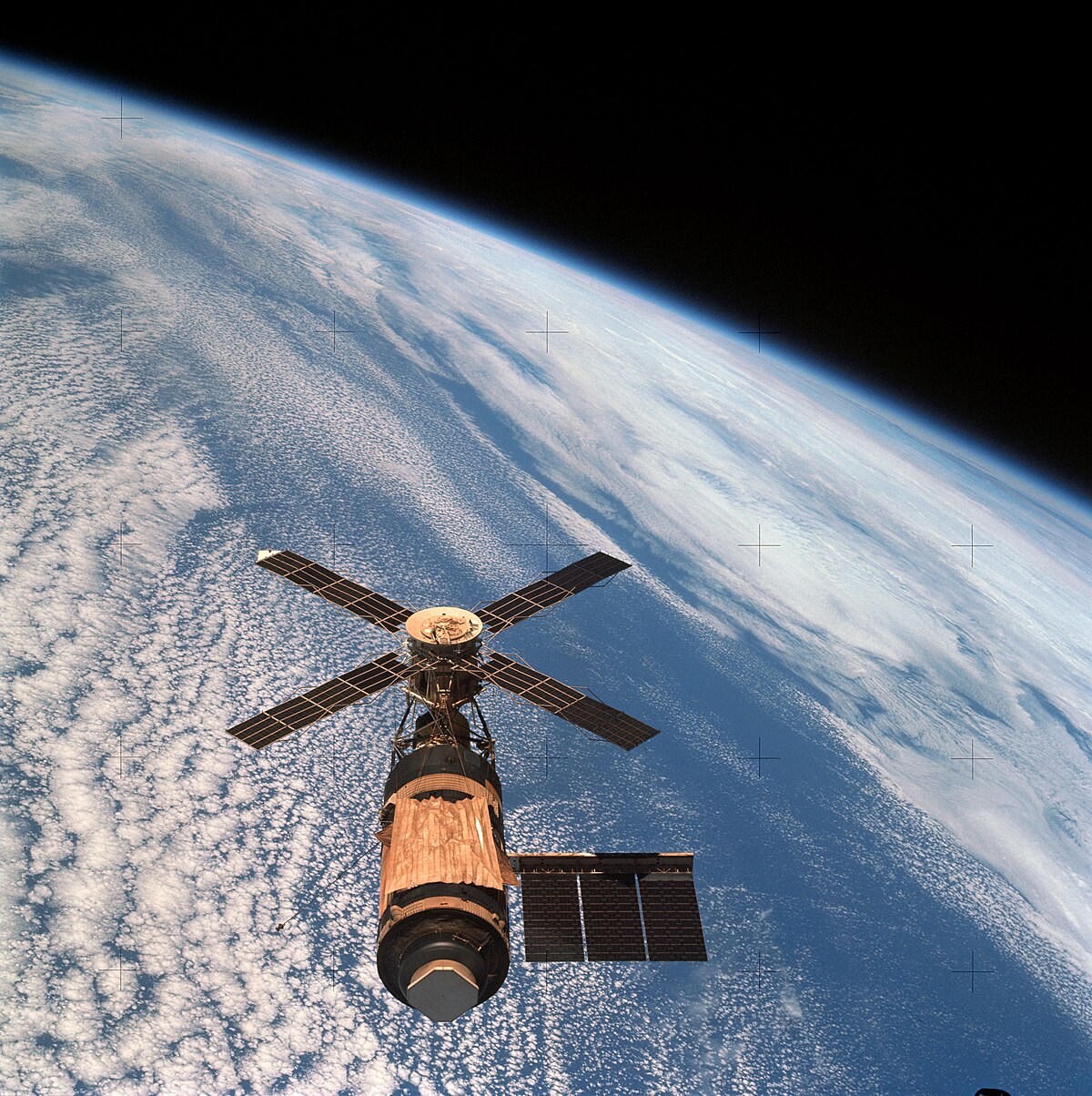
Skylab Orbital Workshop as photographed by the Skylab 4 CSM during the final fly-around by the CSM before returning home.
America's first space station in orbit
1975 CE
Apollo-Soyuz Test Project
American and Soviet spacecraft docked in orbit for the first time, with crews shaking hands in space. This joint mission marked the symbolic end of the Space Race and the beginning of international cooperation in space exploration.

American Stafford and Russian Leonov shake hands in space aboard the Apollo–Soyuz docking adapter.
Historic handshake symbolizing the end of the Space Race
1976 CE
Viking 1 and 2 Land on Mars
NASA successfully landed two Viking spacecraft on Mars, taking the first photographs from the Martian surface and conducting extensive scientific analysis. These missions provided detailed information about Mars and demonstrated American leadership in planetary exploration.

Surface of Mars taken by Viking 1.
First detailed photographs from the Martian surface
1981 CE
First Space Shuttle Flight
NASA's Space Shuttle Columbia completed its first orbital test flight, marking the beginning of the reusable spacecraft era. The Space Shuttle program represented a new approach to space access, though it proved more expensive and dangerous than initially planned.
1983 CE
Sally Ride First American Woman in Space
Sally Ride became the first American woman in space aboard Space Shuttle Challenger on STS-7. Her flight marked a significant milestone in gender equality in space exploration and inspired a generation of women to pursue careers in science and technology.
1986 CE
Mir Space Station Assembly Begins
The Soviet Union began assembling the Mir space station, which would become the largest spacecraft and maintain the longest continuous human presence in space. Mir represented the pinnacle of Soviet space station technology and international cooperation.

Salyut-7 with Kosmos1686 and Soyuz T-15 docked, truss extended, May 31, 1986
Soviet space station technology leading to Mir
1988 CE
Buran Shuttle First Flight
The Soviet Union's Buran space shuttle completed its first and only orbital flight, flying unmanned and landing automatically. This achievement demonstrated Soviet capability to match American shuttle technology, though the program was canceled due to the USSR's collapse.

Soyuz, US Space Shuttle, and Energia-Buran
Comparison of Soviet and American reusable spacecraft
1991 CE
Soviet Union Collapses
The collapse of the Soviet Union effectively ended the Space Race as a competition between superpowers. The Russian Federation inherited most Soviet space assets, leading to increased cooperation with the United States in space exploration.