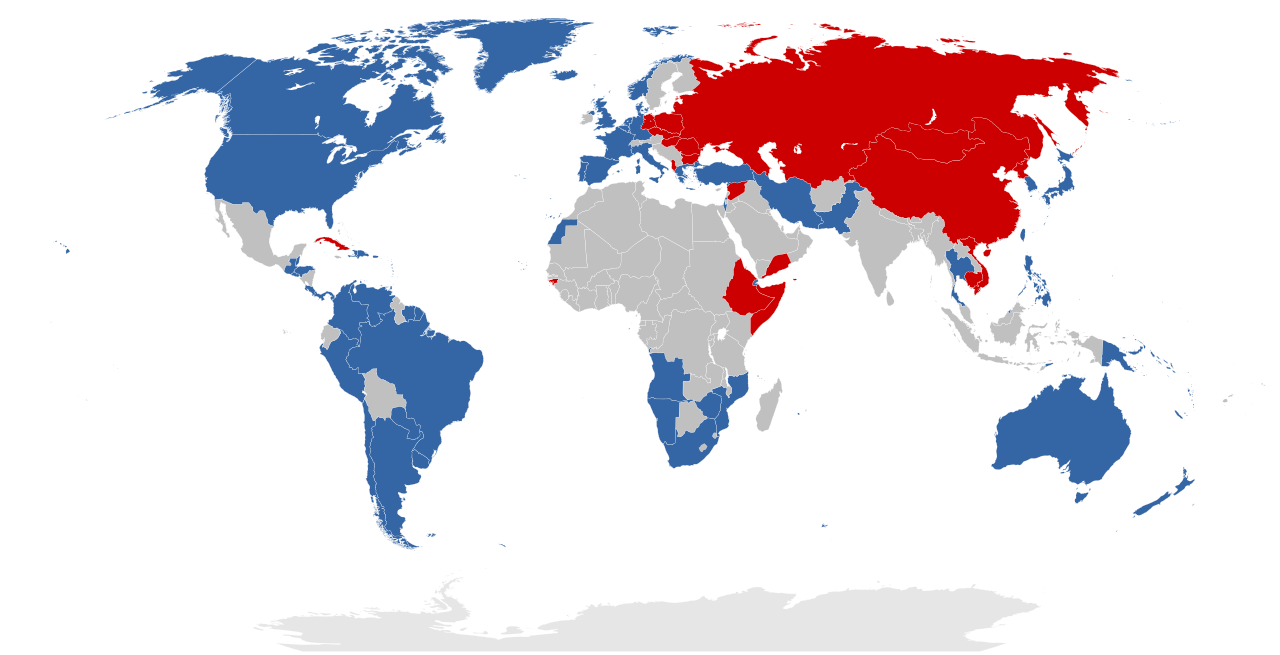
File:Cold War alliances mid-1975.svg
Map showing the global division of Cold War alliances in 1975, illustrating the worldwide scope of the US-Soviet rivalry
Cold War
The Cold War was a period of geopolitical rivalry between the United States and the Soviet Union from the end of World War II until the dissolution of the USSR in 1991. This timeline covers major events including the formation of alliances, proxy wars, nuclear crises, space race milestones, and the eventual collapse of the Soviet Union. It spans nearly five decades of ideological, military, and political competition that shaped the modern world.
Source: Wikipedia1945 CE – 1949 CE
George Orwell Coins 'Cold War' Term
Writer George Orwell used the term 'cold war' in his essay 'You and the Atomic Bomb,' published on 19 October 1945. Contemplating a world living under the threat of nuclear warfare, Orwell envisioned a polarized world divided between superpowers. This was the first notable use of the term that would come to define the post-war era.
George Kennan's 'Long Telegram'
In February 1946, George F. Kennan sent his famous 'Long Telegram' from Moscow to Washington, articulating the US government's increasingly hard line against the Soviets. The telegram helped shape the Truman administration's Soviet policy and became the basis for the US strategy of containment. It galvanized a policy debate that would define American foreign policy for decades.
Churchill's 'Iron Curtain' Speech
On 5 March 1946, former British Prime Minister Winston Churchill delivered his famous 'Iron Curtain' speech in Fulton, Missouri, calling for an Anglo-American alliance against the Soviets. Churchill accused the USSR of establishing an 'iron curtain' dividing Europe from the Baltic to the Adriatic. The speech crystallized Western concerns about Soviet expansionism and became one of the defining moments of the early Cold War.

File:Čížov (Zaisa) - preserved part of Iron curtain.JPG
Remains of the Iron Curtain in the Czech Republic, symbolizing the division Churchill warned about
Novikov Telegram
In September 1946, the Soviet side produced the Novikov telegram, sent by the Soviet ambassador to the US but commissioned and co-authored by Vyacheslav Molotov. It portrayed the US as being in the grip of monopoly capitalists building up military capability to prepare for world domination. The telegram was the Soviet counterpart to Kennan's Long Telegram and reflected the hardening of Soviet attitudes toward the West.
Byrnes Stuttgart Speech
On 6 September 1946, US Secretary of State James F. Byrnes delivered a speech in Germany repudiating the Morgenthau Plan and warning the Soviets that the US intended to maintain a military presence in Europe indefinitely. The speech signaled a shift in US policy toward rebuilding Germany as a bulwark against Soviet expansion. It was a key moment in the emerging Cold War confrontation over Germany's future.
Truman Doctrine Announced
In 1947, US President Harry S. Truman delivered a speech calling for $400 million to intervene in the Greek Civil War and unveiled the Truman Doctrine, framing the conflict as a contest between free peoples and totalitarian regimes. The doctrine committed the United States to containing Soviet influence globally and became the cornerstone of US Cold War foreign policy. It marked the beginning of a bipartisan defense consensus focused on containment and deterrence.
Bernard Baruch Popularizes 'Cold War' Term
On 16 April 1947, Bernard Baruch, an influential advisor to Democratic presidents, used the term 'cold war' in a speech to describe the specific post-war geopolitical confrontation between the Soviet Union and the United States. The speech, written by journalist Herbert Bayard Swope, proclaimed 'we are today in the midst of a cold war.' This was the first use of the term to describe the specific US-Soviet rivalry.
Marshall Plan Enacted
In June 1947, in accordance with the Truman Doctrine, the United States enacted the Marshall Plan, a pledge of economic assistance for all European countries willing to participate. President Truman signed the plan on 3 April 1948, providing over $13 billion to Western European countries. The plan aimed to rebuild democratic and economic systems in Europe and counter the appeal of communism.

File:US-MarshallPlanAid-Logo.svg
The labeling used on Marshall Plan economic aid to Western Europe
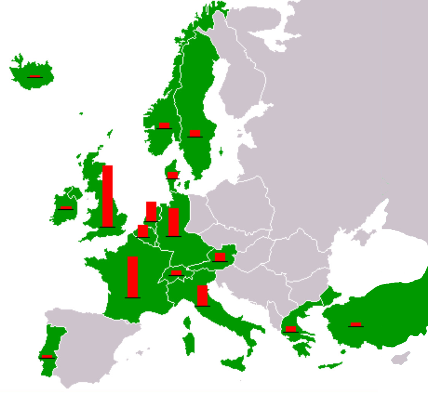
File:Marshall Plan.png
Map showing countries that received Marshall Plan aid with relative amounts
Cominform Established
In September 1947, the Soviets created Cominform to impose orthodoxy within the international communist movement and tighten political control over Soviet satellites through coordination of communist parties in the Eastern Bloc. The organization was designed to coordinate communist parties across Europe and counter the Marshall Plan. It represented the Soviet Union's effort to consolidate its ideological and political control over Eastern Europe.
Czechoslovak Communist Coup
In early 1948, Czech Communists executed a coup d'état in Czechoslovakia, resulting in the formation of the Czechoslovak Socialist Republic. This was the only Eastern Bloc state that the Soviets had permitted to retain democratic structures. The public brutality of the coup shocked Western powers and swept away the last vestiges of opposition to the Marshall Plan in the US Congress.
Marshall Plan Signed by Truman
President Harry S. Truman signed the Marshall Plan on 3 April 1948, committing the US government to providing over $13 billion in economic assistance to Western European countries. The plan was a cornerstone of US Cold War strategy, aimed at rebuilding war-devastated economies and preventing the spread of communism. It later led to the creation of the OECD.

File:Marshallplanhilfe.gif
Construction in West Berlin under Marshall Plan aid
Berlin Blockade Begins
In June 1948, Stalin instituted the Berlin Blockade, preventing Western supplies from reaching West Berlin. The United States, Britain, France, Canada, Australia, New Zealand, and several other countries responded with the massive 'Berlin Airlift,' supplying West Berlin with provisions despite Soviet threats. The blockade was one of the first major crises of the Cold War and firmly linked West Berlin to the United States.

File:C-47s at Tempelhof Airport Berlin 1948.jpg
American C-47s unloading at the Berlin Tempelhof Airport during the Berlin Blockade
NATO Founded
Britain, France, the United States, Canada, and eight other western European countries signed the North Atlantic Treaty in April 1949, establishing the North Atlantic Treaty Organization (NATO). The alliance was essentially a defensive agreement designed to counter Soviet influence in Europe. NATO became the cornerstone of Western collective security throughout the Cold War.

File:Truman signing North Atlantic Treaty.jpg
President Truman signs the North Atlantic Treaty with guests in the Oval Office
Soviet Union Tests First Nuclear Weapon
In August 1949, the Soviet Union detonated its first nuclear device in Semipalatinsk, Kazakh SSR, ending the American atomic monopoly. This was achieved four years after the US used nuclear weapons on Hiroshima and Nagasaki, and much sooner than Western experts had expected. The Soviet atomic test dramatically escalated Cold War tensions and triggered a nuclear arms race between the superpowers.

File:US and USSR nuclear stockpiles.svg
US and USSR/Russian nuclear weapons stockpiles, 1945–2006
People's Republic of China Founded
In 1949, Mao Zedong's People's Liberation Army defeated Chiang Kai-shek's US-backed Kuomintang Nationalist Government in China, establishing the People's Republic of China. The Kremlin promptly created an alliance with the newly formed PRC. This dramatically shifted the global balance of power and confronted the Truman administration with the challenge of communist expansion in Asia.
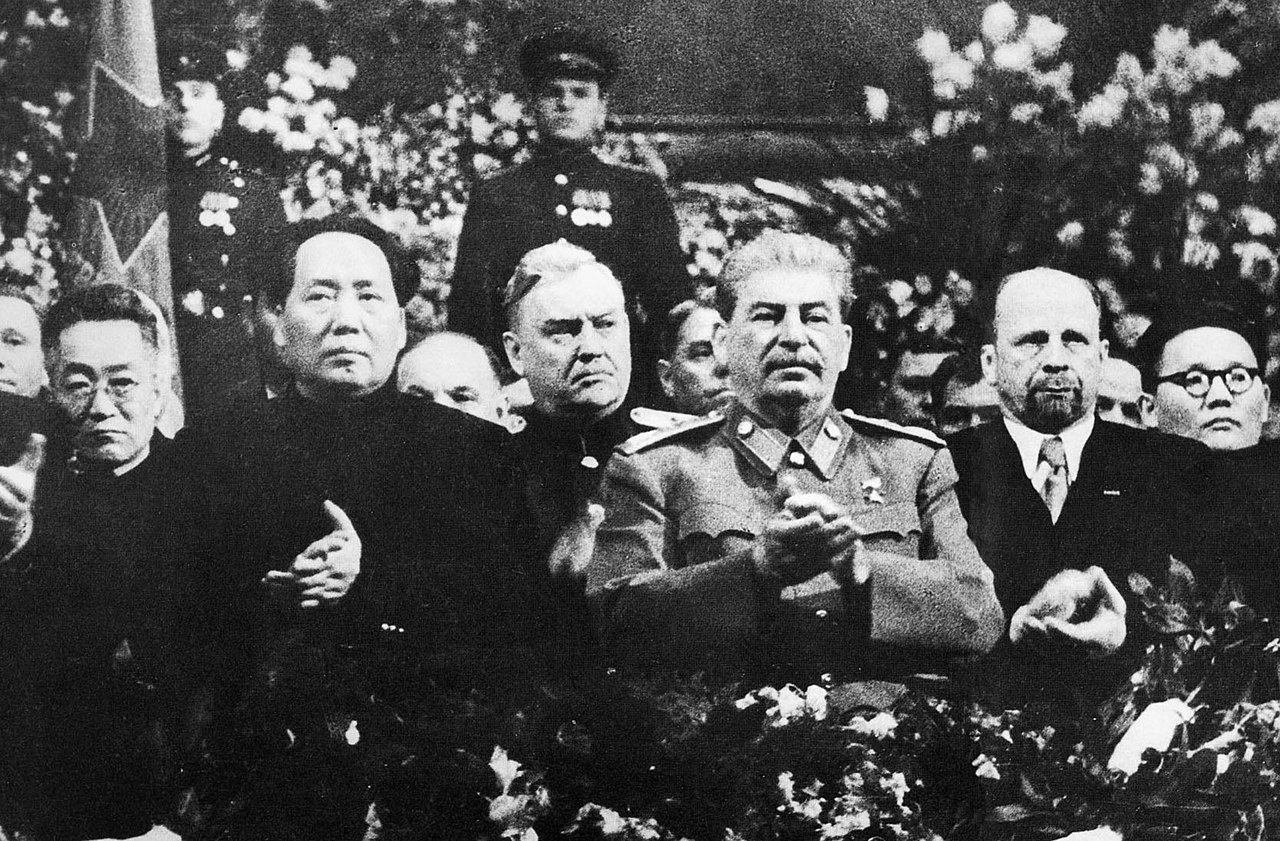
File:Mao, Bulganin, Stalin, Ulbricht Tsedenbal.jpeg
Mao Zedong and Joseph Stalin in Moscow, December 1949
1950 CE – 1954 CE
NSC 68 Proposes Massive Defense Buildup
In 1950, the National Security Council produced NSC 68, a secret document proposing to reinforce pro-Western alliance systems and quadruple spending on defense. The document reflected the Truman administration's response to the communist revolution in China and the end of the American atomic monopoly. It fundamentally shaped US Cold War strategy by advocating for a massive expansion of military capabilities.
Korean War Begins
In June 1950, after years of mutual hostilities, Kim Il Sung's North Korean People's Army invaded South Korea, triggering the Korean War. The United Nations Security Council backed the defense of South Korea, and a UN force of sixteen countries faced North Korea. The war became one of the first major proxy conflicts of the Cold War and galvanized NATO to develop a military structure.

File:IncheonLandingMcArthur.jpg
General Douglas MacArthur observes the naval shelling of Incheon, Korea, 15 September 1950
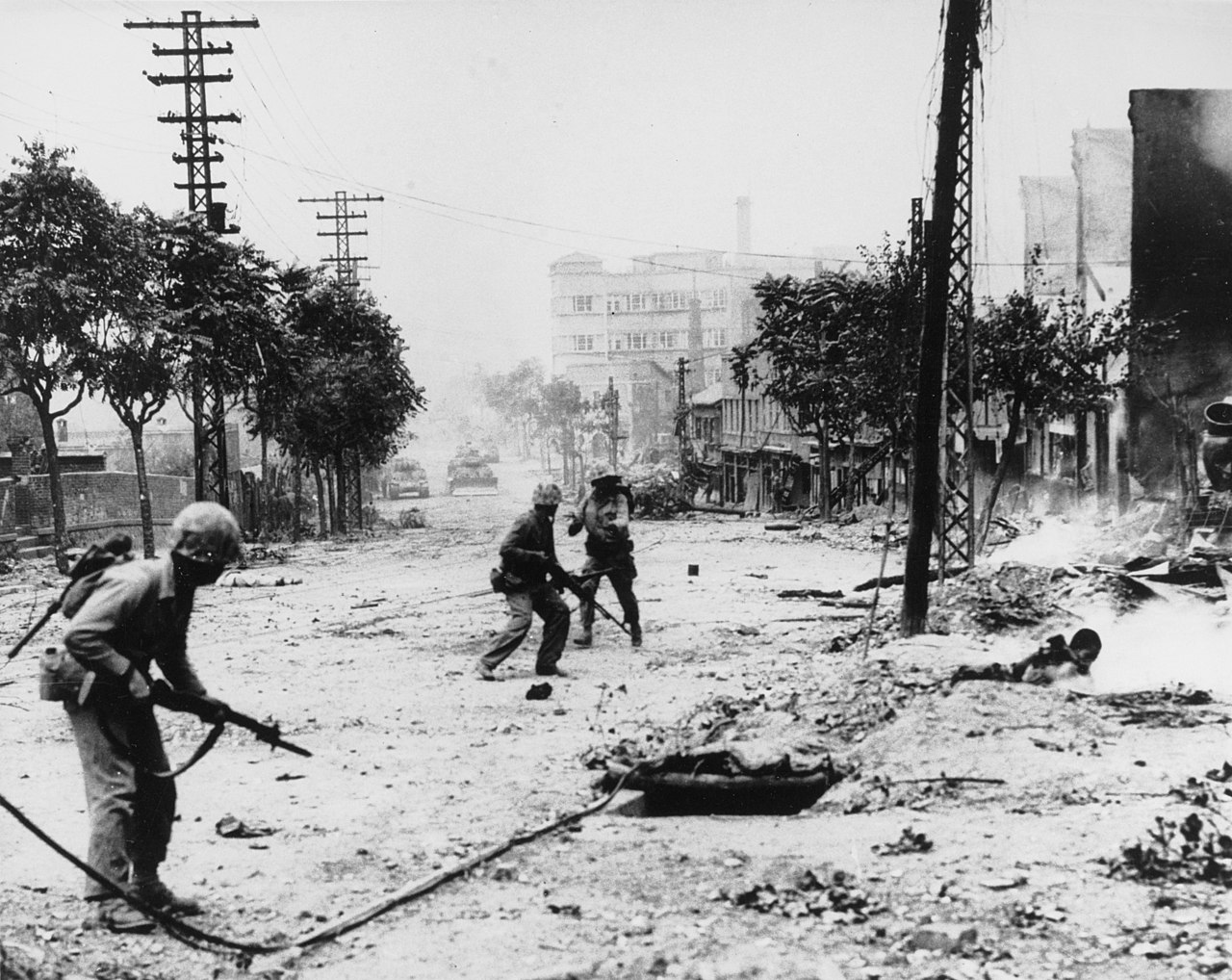
File:KoreanWar recover Seoul.jpg
US Marines engaged in street fighting during the liberation of Seoul, September 1950
Stalin Dies; Khrushchev Rises to Power
Joseph Stalin died in 1953, shifting the dynamic of the Cold War. Nikita Khrushchev eventually won the ensuing power struggle by the mid-1950s. In 1956, Khrushchev denounced Stalin and proceeded to ease controls over the party and society in a process known as de-Stalinization, marking a significant change in Soviet domestic and foreign policy.
CIA Coup in Iran (Operation Ajax)
In 1953, President Eisenhower implemented Operation Ajax, a covert CIA operation to overthrow Iranian Prime Minister Mohammad Mosaddegh, who had nationalized the British-owned Anglo-Iranian Oil Company. The pro-Western Shah Mohammad Reza Pahlavi assumed control as an autocratic monarch. The operation was a significant example of US covert intervention in the Third World during the Cold War.
Korean Armistice Agreement
The Korean Armistice Agreement was approved in July 1953, ending active fighting in the Korean War in a stalemate roughly along the original border at the 38th Parallel. The war had demonstrated both the limits and the importance of the containment doctrine. Nearly 40,000 Americans died in the conflict, which ended without a formal peace treaty.
CIA-Backed Coup in Guatemala
In 1954, the CIA supported the Guatemalan coup d'état that ousted left-wing President Jacobo Árbenz. The post-Arbenz military government repealed progressive land reform laws, returned nationalized property to the United Fruit Company, and established anti-communist institutions at US request. The coup was a major example of US Cold War intervention in Latin America.
1955 CE – 1959 CE
Warsaw Pact Established
In 1955, the Soviet Union established the Warsaw Pact, a formal military alliance among Eastern Bloc nations, as a counterpart to NATO. Although nominally a defensive alliance, the Warsaw Pact's primary function was to safeguard Soviet hegemony over its Eastern European satellites. Its only direct military actions were invasions of its own member states to prevent them from breaking away.
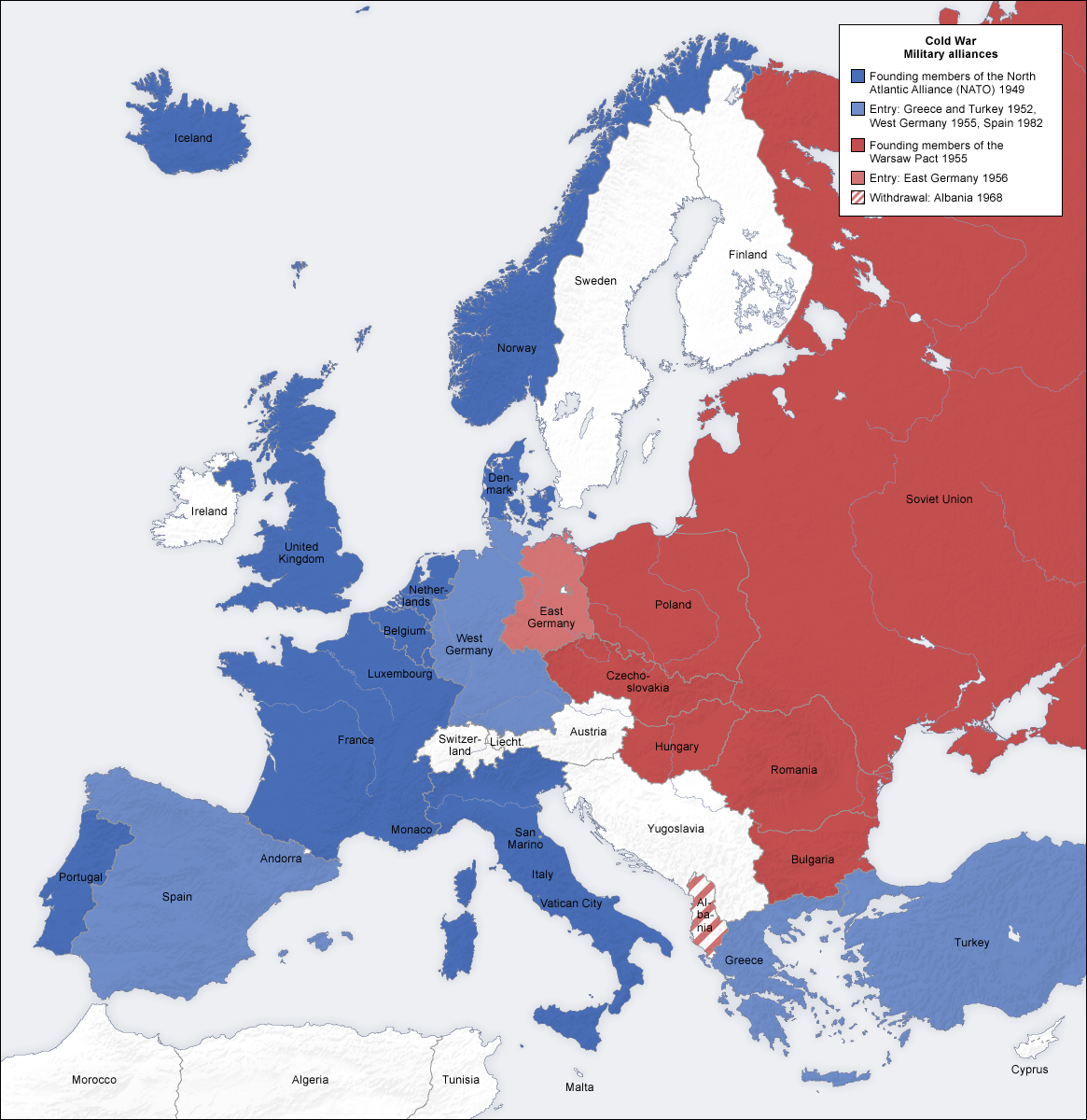
File:Cold war europe military alliances map en.png
Map of Cold War military alliances in Europe showing NATO and Warsaw Pact
West German Bundeswehr Established
In 1955, Washington secured full German membership of NATO and the Bundeswehr, the West German military, was established. The rearmament of West Germany had been a contentious issue, with France as the main opponent, but the outbreak of the Korean War in 1950 had changed calculations. West Germany's integration into NATO was a major step in the Western alliance's military posture against the Soviet Union.
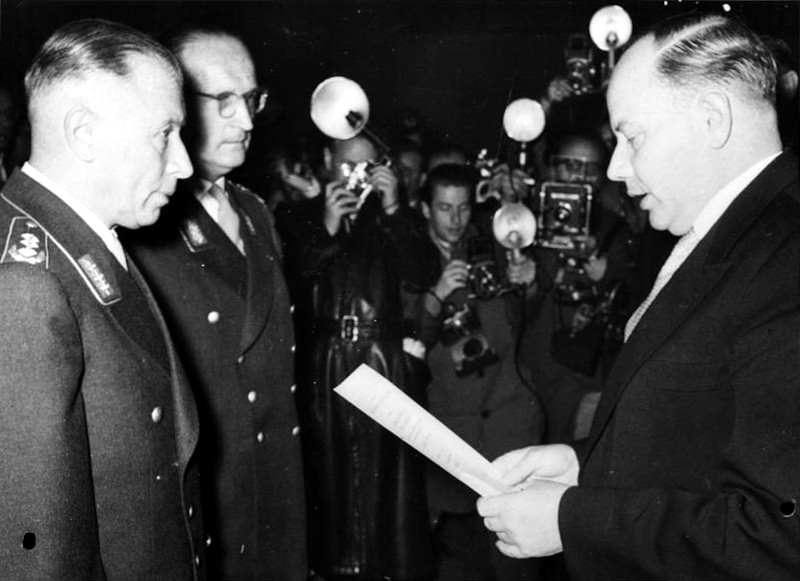
File:Bundesarchiv Bild 183-34150-0001, Bonn, Theodor Blank, Bundeswehrfreiwillige.jpg
Generals Adolf Heusinger and Hans Speidel sworn into the newly founded Bundeswehr by Theodor Blank in November 1955
Hungarian Revolution Crushed by Soviet Forces
The Hungarian Revolution of 1956 occurred after Khrushchev arranged the removal of Hungary's Stalinist leader. In response to a popular anti-communist uprising, the new regime declared its intention to withdraw from the Warsaw Pact and pledged free elections. The Soviet Army invaded, killing thousands of Hungarians and causing approximately 200,000 to flee the country.
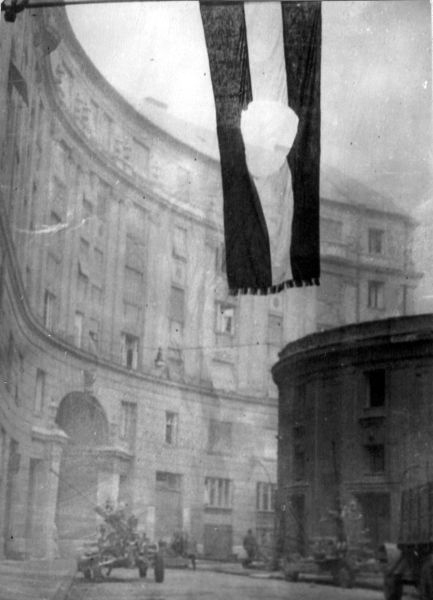
File:Hole in flag - Budapest 1956.jpg
Hungarian flag with the communist coat of arms cut out, an anti-Soviet revolutionary symbol

File:Kossuth Lajos utca Budapest 1956
Budapest street scene during the 1956 Hungarian Revolution
Khrushchev's 'We Will Bury You' Speech
On 18 November 1956, while addressing Western dignitaries at a reception in Moscow's Polish embassy, Khrushchev declared 'Whether you like it or not, history is on our side. We will bury you,' shocking everyone present. He later claimed he had not been referring to nuclear war but to the historically fated victory of communism over capitalism. The statement became one of the most famous and alarming declarations of the Cold War.
Soviet Union Launches Sputnik 1
In October 1957, the Soviet Union launched Sputnik 1, the first Earth satellite, following their successful launch of the world's first intercontinental ballistic missile in August. The CIA described the orbit of Sputnik 1 as a 'stupendous scientific achievement' and concluded the USSR had likely perfected an ICBM capable of reaching any desired target. The launch inaugurated the Space Race and triggered the Sputnik crisis in the United States.

File:Space Race images.png
Clockwise from top left: Sputnik 1, Apollo 11 Moon landing, Space station Mir
Berlin Crisis of 1958–1959
During November 1958, Khrushchev made an unsuccessful attempt to turn all of Berlin into an independent, demilitarized 'free city,' giving the Western powers a six-month ultimatum to withdraw their troops from West Berlin. NATO formally rejected the ultimatum in mid-December, and Khrushchev withdrew it in return for a Geneva conference on the German question. The crisis highlighted the ongoing tensions over the divided city of Berlin.
Cuban Revolution
On 1 January 1959, the 26th of July Movement, led by Fidel Castro and Che Guevara, seized power in Cuba in the Cuban Revolution. Although Castro initially refused to categorize his government as socialist, he appointed Marxists to senior government and military positions. The revolution installed the first communist regime in the Western Hemisphere, dramatically escalating Cold War tensions in the Americas.

File:CheyFidel.jpg
Che Guevara (left) and Fidel Castro (right) in 1961
1960 CE – 1964 CE
U-2 Spy Plane Incident
Plans for a two-power summit in May 1960 were disturbed by the U-2 spy plane scandal, in which Eisenhower was caught lying about the intrusion of American surveillance aircraft into Soviet territory. The incident derailed the planned summit and damaged US-Soviet relations at a time when there had been substantial hopes for détente. It demonstrated the extent of aerial espionage conducted by both superpowers.
Congo Crisis and Lumumba Assassination
In June 1960, the Republic of the Congo gained independence from Belgium, and the Congo Crisis erupted on 5 July, leading to the secession of Katanga and South Kasai. CIA-backed President Kasa-Vubu dismissed democratically elected Prime Minister Patrice Lumumba, and CIA-backed Colonel Mobutu Sese Seko seized power. Lumumba was handed over to Katangan authorities who executed him by firing squad.
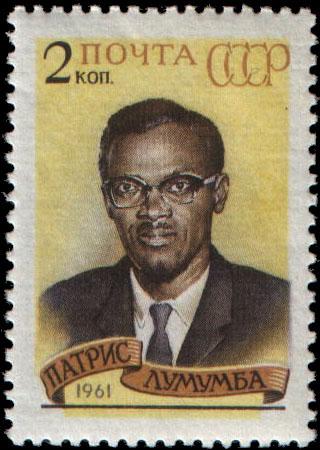
File:The Soviet Union 1961 CPA 2576 stamp
1961 USSR stamp commemorating Patrice Lumumba, assassinated prime minister of the Republic of the Congo
Non-Aligned Movement Founded
In 1961, the Non-Aligned Movement was founded and headquartered in Belgrade, culminating from the consensus reached at the 1955 Bandung Conference in Indonesia. Dozens of Third World governments resolved to stay out of the Cold War and assert their independence from both superpowers. The movement represented the growing influence of decolonized nations in international affairs.
Sino-Soviet Split Becomes Official
By 1961, relations between the USSR and China had broken down, with the Sino-Soviet split bringing the two states to the brink of war. Mao had defended Stalin when Khrushchev criticized him in 1956 and treated the new Soviet leader as a superficial upstart. The split was one of the key events of the Cold War, fundamentally altering the global communist movement and creating opportunities for US diplomacy.

File:Soviet empire 1960.png
Map showing greatest territorial extent of Soviet influence before the official Sino-Soviet split of 1961
Bay of Pigs Invasion
In April 1961, the administration of newly elected President John F. Kennedy mounted the unsuccessful CIA-organized ship-borne invasion of Cuba by Cuban exiles at Playa Girón and Playa Larga. The failure publicly humiliated the United States and led Castro to publicly embrace Marxism-Leninism. The Soviet Union pledged to provide further support to Cuba following the failed invasion.
Berlin Wall Constructed
On 13 August 1961, East Germany erected a barbed-wire barrier that would eventually be expanded into the Berlin Wall, effectively closing the loophole through which hundreds of thousands of East Germans had been emigrating to West Germany. By 1961, nearly 20% of East Germany's population had migrated to West Germany through the gap between East and West Berlin. The Wall became the most potent symbol of the Iron Curtain and the division of Europe.

File:US Army tanks face off against Soviet tanks, Berlin 1961.jpg
Soviet and American tanks face each other at Checkpoint Charlie during the Berlin Crisis of 1961
Cuban Missile Crisis
In October 1962, the Cuban Missile Crisis brought the world closer to nuclear war than ever before, after the Soviet Union installed nuclear missiles in Cuba in response to US missiles in Europe and Operation Mongoose. Kennedy responded with a naval blockade and an ultimatum to the Soviets. Khrushchev backed down and the Soviet Union removed the missiles in return for a public American pledge not to invade Cuba and a covert deal to remove US missiles from Turkey.

File:Cuban missiles.jpg
Aerial photograph of a Soviet missile site in Cuba, taken by a US spy aircraft, 1 November 1962
Partial Nuclear Test Ban Treaty Signed
The Partial Nuclear Test Ban Treaty was signed on August 5, 1963, by the United States, the Soviet Union, and over 100 other nations. The treaty banned nuclear weapons tests in the atmosphere, outer space, and underwater, restricting such tests to underground environments. It followed heightened concerns over the militarization of space and was one of the first arms control agreements of the Cold War.
Khrushchev Ousted from Power
In 1964, Khrushchev's Kremlin colleagues managed to oust him, though they allowed him a peaceful retirement. He was accused of rudeness and incompetence, and was blamed for ruining Soviet agriculture, bringing the world to the brink of nuclear war during the Cuban Missile Crisis, and becoming an 'international embarrassment' when he authorized construction of the Berlin Wall. His removal marked the end of a turbulent period in Soviet leadership.
Gulf of Tonkin Incident and Vietnam War Escalation
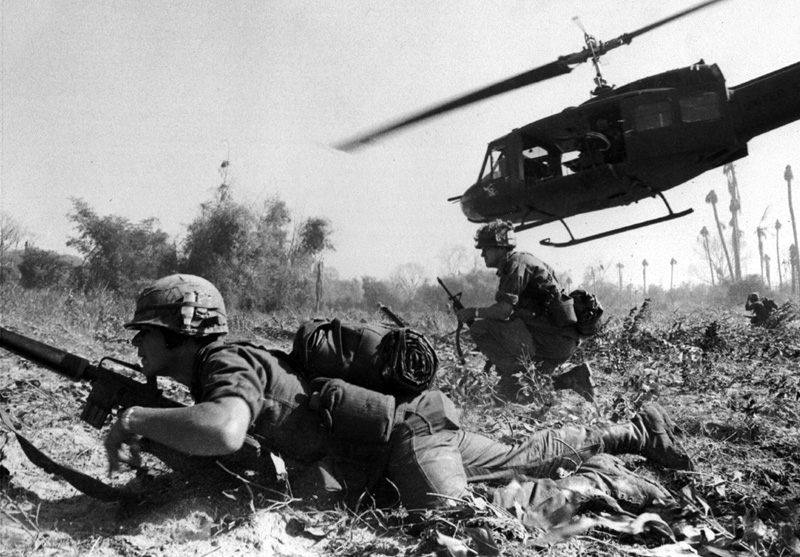
In 1964, the controversial Gulf of Tonkin incident, in which a US destroyer was alleged to have clashed with North Vietnamese fast attack craft, led to the Gulf of Tonkin Resolution giving President Lyndon B. Johnson broad authorization to increase US military presence in Vietnam. Ground combat units were deployed for the first time and troop levels rose to 184,000. Soviet leader Brezhnev reversed Khrushchev's policy of disengagement and increased aid to North Vietnam.
File:Bruce Crandall's UH-1D.jpg
US combat operations during the Battle of Ia Drang, South Vietnam, November 1965
1965 CE – 1969 CE
Indonesian Mass Killings and Suharto's Rise
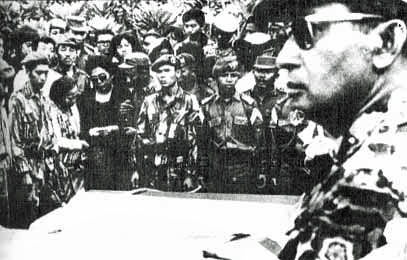
From 1965 to 1966, with the aid of the US and other Western governments, the Indonesian military led the mass killing of more than 500,000 members and sympathizers of the Indonesian Communist Party and other leftist organizations. General Suharto wrested control from predecessor Sukarno in an attempt to establish a 'New Order.' A top-secret CIA report stated that the massacres 'rank as one of the worst mass murders of the 20th century.'
File:Suharto at funeral.jpg
Suharto of Indonesia attending funeral of five generals slain in 30 September Movement, 2 October 1965
Glassboro Summit Conference
In 1967, Soviet Premier Alexei Kosygin met with US President Lyndon B. Johnson at the Glassboro Summit Conference in New Jersey. The meeting was an attempt to ease Cold War tensions during a period of ongoing conflict in Vietnam and the Middle East. It represented one of the few direct diplomatic contacts between the superpowers during this tense period.

File:Glassboro-meeting1967.jpg
Soviet Premier Alexei Kosygin with U.S. President Lyndon B. Johnson at the 1967 Glassboro Summit Conference
Outer Space Treaty Signed
The Outer Space Treaty was signed on January 27, 1967, by the United States, the Soviet Union, and the United Kingdom, entering into force on October 10, 1967. The treaty established space as a domain to be used exclusively for peaceful purposes, prohibiting the placement of nuclear weapons or any other weapons of mass destruction in orbit or on celestial bodies. It was a significant arms control achievement during the Cold War.
Tet Offensive in Vietnam
The Tet Offensive of 1968 proved to be the turning point of the Vietnam War, as the communist forces launched a massive coordinated attack across South Vietnam. Despite years of American tutelage and aid, the South Vietnamese forces were unable to withstand the communist offensive and the task fell to US forces. The offensive shattered American public confidence in the war effort and accelerated the eventual US withdrawal.
Soviet Invasion of Czechoslovakia
On 20 August 1968, the Soviet Army, together with most of their Warsaw Pact allies, invaded Czechoslovakia to crush the Prague Spring reform movement. The invasion was followed by a wave of emigration, with an estimated 70,000 Czechs and Slovaks initially fleeing and the total eventually reaching 300,000. The invasion sparked intense protests from Yugoslavia, Romania, China, and Western European countries.

File:10 Soviet Invasion of Czechoslovakia
The invasion of Czechoslovakia by the Soviet Union in 1968 was one of the biggest military operations on European soil since World War II
Sino-Soviet Border Conflict
As a result of the Sino-Soviet split, tensions along the Chinese-Soviet border reached their peak in 1969, when the Soviet Union planned to launch a large-scale nuclear strike against China. US President Richard Nixon intervened and decided to use the conflict to shift the balance of power towards the West through a policy of rapprochement with China. The crisis demonstrated how far the Sino-Soviet split had progressed.
Apollo Moon Landing
In 1969, the United States achieved the Apollo Moon landings, the most notable milestone of the Space Race. Astronaut Frank Borman later described it as 'just a battle in the Cold War.' The Soviet government limited the release of information about the lunar landing, which affected public reaction in the USSR. The achievement represented a major victory for the United States in the technological competition with the Soviet Union.
File:Space Race images.png
Clockwise from top left: Sputnik 1, Apollo 11 Moon landing, Space station Mir
1970 CE – 1974 CE
Nixon Visits China
In 1972, US President Richard Nixon made his historic visit to China, beginning the process of rapprochement between the two countries. Nixon used the Sino-Soviet conflict to shift the balance of power towards the West in the Cold War. The visit culminated in 1979 with the signing of the Joint Communiqué on the Establishment of Diplomatic Relations by President Carter and Chinese Communist Party leader Deng Xiaoping.

File:President Richard Nixon and Premier Chou En-Lai Shake Hands
U.S. President Richard Nixon shakes hands with Chinese Premier Zhou Enlai at Beijing Capital International Airport
SALT I Arms Limitation Treaties Signed
Following Nixon's visit to China, he met with Soviet leaders in Moscow, and these Strategic Arms Limitation Talks resulted in landmark arms control treaties. Nixon and Brezhnev proclaimed a new era of 'peaceful coexistence' and established the groundbreaking new policy of détente between the superpowers. The treaties aimed to limit the development of costly anti-ballistic missiles and nuclear missiles.
1973 Oil Crisis
In the 1973 oil crisis, the Organization of Petroleum Exporting Countries (OPEC) cut their petroleum output, raising oil prices and hurting Western economies. The crisis helped the Soviet Union by generating a huge flow of money from its oil sales. Combined with the growing influence of Third World alignments, the crisis gave less powerful countries more room to assert their independence from both superpowers.
1975 CE – 1979 CE
Helsinki Accords Signed
In 1975, the Helsinki Accords were signed at the Conference on Security and Co-operation in Europe, in which the Soviets promised to grant free elections in Europe. The accords were considered a major concession by the Soviets to ensure peace, though in practice the Soviet government significantly curbed civil liberties. The Helsinki Accords also included legally-binding human rights documents that would later be used by dissidents to challenge Soviet authority.
Vietnam War Ends in US Defeat
The Vietnam War ended in 1975 with defeat for the United States, as North Vietnamese forces captured Saigon. The war had descended into a quagmire for the United States, leading to a decline in international prestige and economic stability, derailing arms agreements, and provoking domestic unrest. America's withdrawal from the war led it to embrace a policy of détente with both China and the Soviet Union.
Saur Revolution in Afghanistan
In April 1978, the communist People's Democratic Party of Afghanistan (PDPA) seized power in Afghanistan in the Saur Revolution. Within months, opponents of the communist regime launched an uprising in eastern Afghanistan that quickly expanded into a civil war waged by guerrilla mujahideen against government forces. The Soviet Union sent thousands of military advisers to support the PDPA government.
Iranian Revolution
In 1979, the Iranian Revolution ousted the pro-US Shah Mohammad Reza Pahlavi, who had been installed following the CIA-backed coup in 1953. The revolution was one of several events that year that undermined President Carter's efforts to limit the arms race with the SALT II agreement. The loss of Iran as a US ally was a major setback for American Cold War strategy in the Middle East.

File:1979 Iranian Revolution.jpg
Iranian people protesting against the Pahlavi dynasty, during the Iranian Revolution
SALT II Treaty Signed
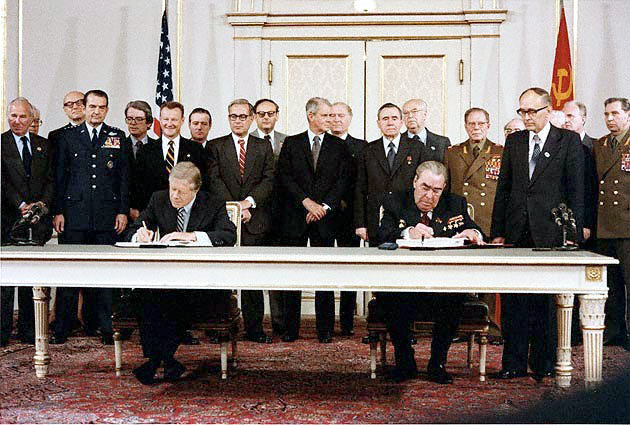
On 18 June 1979, Soviet General Secretary Leonid Brezhnev and US President Jimmy Carter signed the SALT II arms limitation treaty in Vienna. The treaty aimed to place another limit on the nuclear arms race, but Carter's efforts were undermined by the Iranian Revolution, the Nicaraguan Revolution, and the Soviet invasion of Afghanistan later that year. The US Senate never ratified the treaty.
File:Carter Brezhnev sign SALT II.jpg
Soviet general secretary Leonid Brezhnev and US President Jimmy Carter sign the SALT II arms limitation treaty in Vienna on 18 June 1979
Soviet Invasion of Afghanistan
In December 1979, Soviet special forces assassinated Afghan President Hafizullah Amin during Operation Storm-333, and Soviet troops were deployed in large numbers to put Afghanistan under Soviet control. Carter responded by withdrawing the SALT II treaty from ratification, imposing embargoes, and announcing the boycott of the 1980 Summer Olympics. The invasion marked the end of détente and the beginning of a renewed Cold War confrontation.

File:SovietInvasionAfghanistanMap.png
The Soviet invasion during Operation Storm-333 on 26 December 1979
1980 CE – 1984 CE
Reagan Elected President; Cold War Intensifies
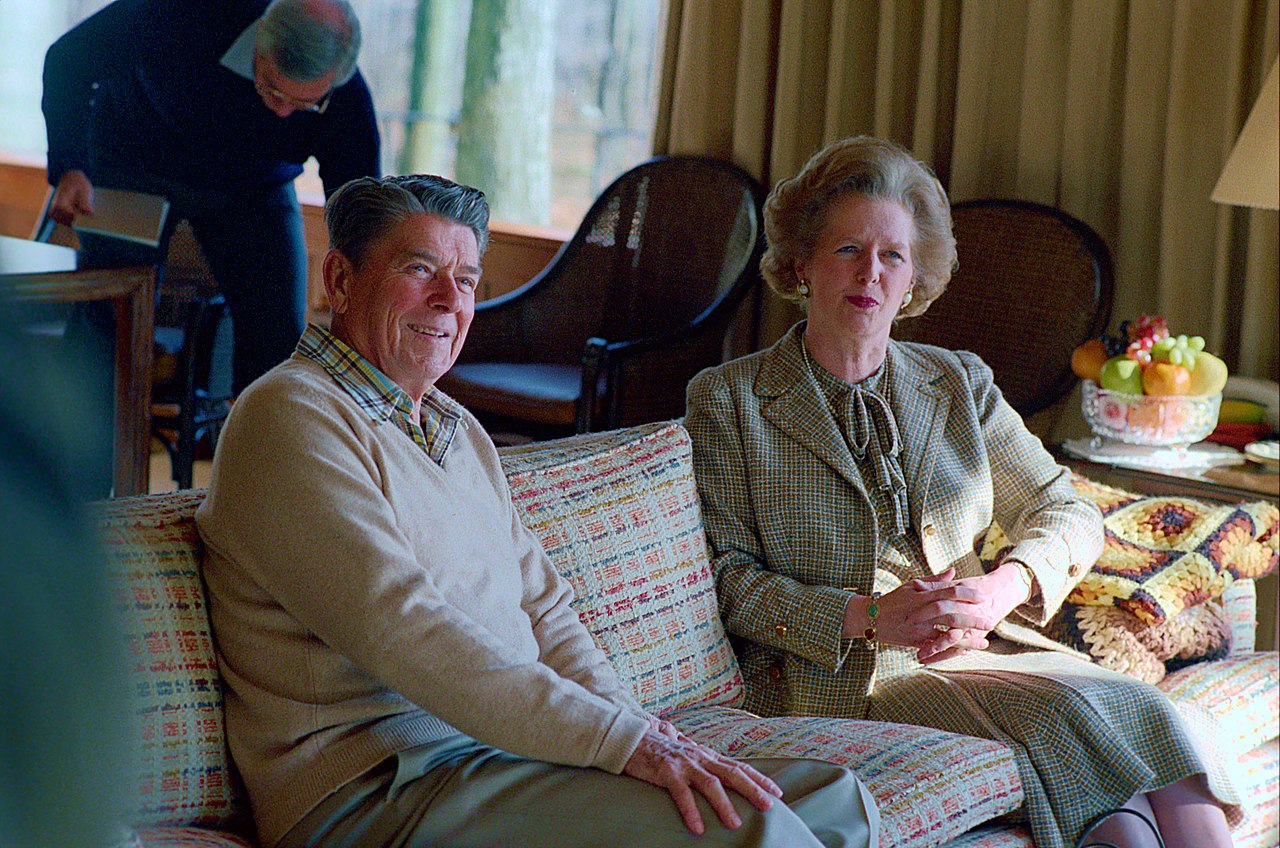
In 1980, Ronald Reagan won the presidential election, vowing to increase military spending and confront the Soviets everywhere. Both Reagan and new British Prime Minister Margaret Thatcher denounced the Soviet Union and its ideology, with Reagan labeling it an 'evil empire.' Reagan's anti-communist position developed into the Reagan Doctrine, which formulated an additional right to subvert existing communist governments.
File:President Ronald Reagan with Prime Minister Margaret Thatcher
President Reagan with Prime Minister Margaret Thatcher during a working luncheon at Camp David, December 1984
Polish Solidarity Movement and Martial Law
Pope John Paul II's visit to Poland in 1979 stimulated a religious and nationalist resurgence centered on the Solidarity movement trade union. In December 1981, Poland's Wojciech Jaruzelski reacted to the crisis by imposing a period of martial law. Reagan imposed economic sanctions on Poland in response, while Soviet ideologist Mikhail Suslov advised Soviet leaders not to intervene for fear of heavy economic sanctions.
Reagan Announces Strategic Defense Initiative
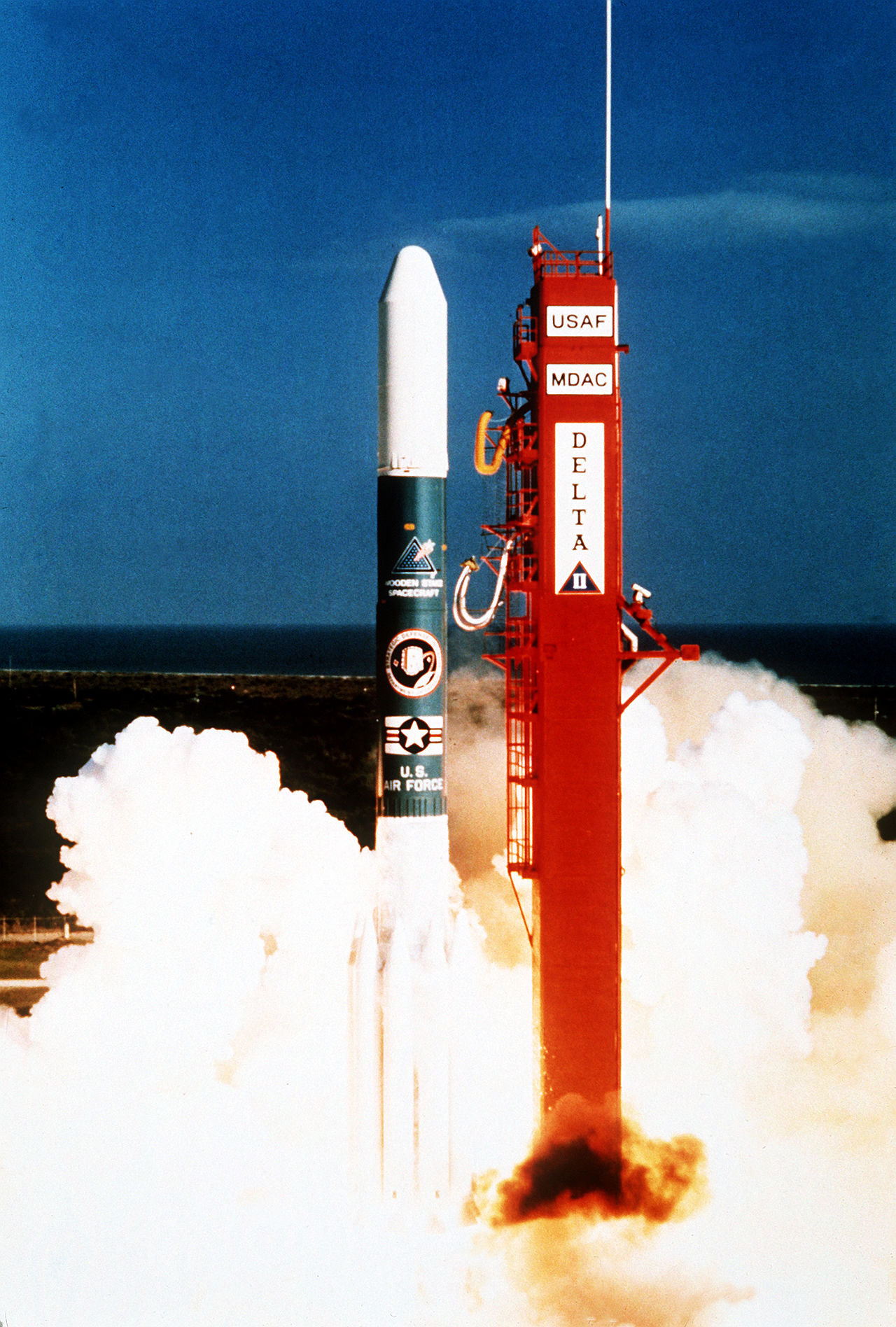
Reagan announced the experimental Strategic Defense Initiative (SDI), dubbed 'Star Wars' by the media, a defense program to shoot down missiles in mid-flight. The announcement was part of a massive US military buildup that increased defense spending from 5.3 percent of GNP in 1981 to 6.5 percent in 1986, the largest peacetime defense buildup in US history. The Soviets did not respond by further building their military, as the enormous military expenses were already a heavy burden on their economy.
File:SDIO Delta Star.jpg
Delta 183 launch vehicle lifts off, carrying the Strategic Defense Initiative sensor experiment 'Delta Star'
Korean Air Lines Flight 007 Shot Down
On 1 September 1983, the Soviet Union shot down Korean Air Lines Flight 007, a Boeing 747 with 269 people aboard, including sitting Congressman Larry McDonald. The airliner had flown through Russian prohibited airspace due to a navigational mistake, and the Soviet Air Force treated it as an intruding US spy plane. Reagan characterized the incident as a massacre, and it increased support for military deployment.
1983 Soviet Nuclear False Alarm Incident
During the early hours of 26 September 1983, systems in Serpukhov-15 underwent a glitch that claimed several intercontinental ballistic missiles were heading towards Russia. Officer Stanislav Petrov correctly suspected it was a false alarm, ensuring the Soviets did not respond to the non-existent attack. He has been credited as 'the man who saved the world' for preventing a potential nuclear war.
Able Archer 83 Exercise
The Able Archer 83 exercise in November 1983, a realistic simulation of a coordinated NATO nuclear release, was perhaps the most dangerous moment since the Cuban Missile Crisis, as the Soviet leadership feared that a nuclear attack might be imminent. The exercise demonstrated how close the superpowers came to nuclear war during the renewed Cold War tensions of the early 1980s. It led to a reassessment of US intelligence about Soviet intentions.
1985 CE – 1989 CE
Gorbachev Becomes Soviet Leader
In 1985, the comparatively youthful Mikhail Gorbachev became General Secretary of the Soviet Union, as the Soviet economy was stagnant and faced a sharp fall in foreign currency earnings due to declining oil prices. Gorbachev investigated measures to revive the ailing state, eventually announcing an agenda of economic reform called perestroika and introducing glasnost, or openness. His reforms would ultimately contribute to the end of the Cold War.

File:President Ronald Reagan and Soviet General Secretary Mikhail Gorbachev at the first Summit in Geneva
Mikhail Gorbachev in one-to-one discussions with US President Ronald Reagan
Geneva Summit Between Reagan and Gorbachev
The first summit between Reagan and Gorbachev was held in November 1985 in Geneva, Switzerland, as Reagan agreed to renew talks on economic issues and the scaling-back of the arms race in response to Soviet military and political concessions. The summit marked the beginning of a thaw in US-Soviet relations after years of intense Cold War confrontation. A second summit was held in October 1986 in Reykjavík, Iceland.
File:President Ronald Reagan and Soviet General Secretary Mikhail Gorbachev at the first Summit in Geneva
Mikhail Gorbachev in one-to-one discussions with US President Ronald Reagan at the Geneva Summit
Reagan's 'Tear Down This Wall' Speech
On 12 June 1987, Reagan delivered his famous 'Tear down this wall!' speech in front of the Brandenburg Gate in West Berlin, directly challenging Soviet leader Gorbachev to open the Berlin Wall. The speech became one of the most iconic moments of the Cold War and symbolized the Western commitment to German reunification and freedom. It came at a time when Gorbachev's reforms were beginning to transform the Soviet Union.

File:President Ronald Reagan making his Berlin Wall speech.jpg
'Tear down this wall!' speech: Reagan speaking in front of the Brandenburg Gate, 12 June 1987
INF Treaty Signed
The Washington Summit of 8-10 December 1987 led to a breakthrough with the signing of the Intermediate-Range Nuclear Forces Treaty (INF) by Reagan and Gorbachev. The INF treaty eliminated all nuclear-armed, ground-launched ballistic and cruise missiles with ranges between 500 and 5,500 kilometers and their infrastructure. It was the first arms control agreement to actually eliminate an entire class of nuclear weapons.

File:Reagan and Gorbachev signing.jpg
Mikhail Gorbachev and Ronald Reagan sign the INF Treaty at the White House, 1987
Soviet Forces Withdraw from Afghanistan
In 1989, Soviet forces withdrew from Afghanistan without achieving their objectives, after nearly a decade of fighting against mujahideen guerrillas supported by the US, China, Britain, Saudi Arabia, and Pakistan. The war had been dubbed 'the Soviets' Vietnam' by outside observers and was far more disastrous for the Soviets than Vietnam had been for the Americans. The withdrawal marked a major defeat for Soviet foreign policy.

File:Reagan sitting with people from the Afghanistan-Pakistan region in February 1983.jpg
President Reagan publicizes his support by meeting with Afghan mujahideen leaders in the White House, 1983
Revolutions of 1989 in Eastern Europe
In 1989, the communist governments in Poland and Hungary became the first to negotiate competitive elections, while in Czechoslovakia and East Germany, mass protests unseated entrenched communist leaders. The communist regimes in Bulgaria and Romania also crumbled, with Romania being the only Eastern-bloc country to topple its communist regime violently. The 1989 revolutionary wave swept across Central and Eastern Europe and peacefully overthrew all Soviet-style Marxist-Leninist states.

File:Bundesarchiv Bild 183-R0518-182, Erich Honecker.jpg
East German leader Erich Honecker lost control in August 1989
Pan-European Picnic and Mass East German Exodus
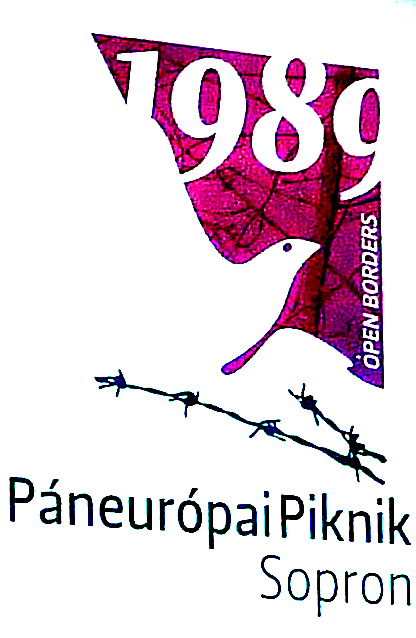
The Pan-European Picnic in August 1989 on the Hungarian-Austrian border started a peaceful movement that the rulers in the Eastern Bloc could not stop. It was the largest movement of refugees from East Germany since the Berlin Wall was built in 1961 and ultimately brought about the fall of the Iron Curtain. The patrons of the picnic, Otto von Habsburg and Hungarian Minister of State Imre Pozsgay, saw the event as an opportunity to test Gorbachev's reaction.
File:00 Páneurópai Piknik emlékhelye.jpg
The Pan-European Picnic took place in August 1989 on the Hungarian-Austrian border

File:Oliver Mark - Otto Habsburg-Lothringen, Pöcking 2006.jpg
Otto von Habsburg, who played a leading role in opening the Iron Curtain
Baltic Way Human Chain
On 23 August 1989, approximately two million people in Estonia, Latvia, and Lithuania formed a human chain known as the Baltic Way, stretching 675 kilometers across all three Baltic states. The demonstration was a powerful protest against Soviet occupation and a call for independence. It was one of the most dramatic expressions of the independence movements that were sweeping the Eastern Bloc.

File:BaltskýŘetěz.jpg
The human chain in Lithuania during the Baltic Way, 23 August 1989
Berlin Wall Falls
In November 1989, the Berlin Wall fell, symbolizing the collapse of European communist governments and graphically ending the Iron Curtain divide of Europe. The fall of the Wall was the culmination of the tidal wave of change that had swept across Eastern Europe throughout 1989. It paved the way for German reunification and marked the effective end of the Cold War in Europe.
File:Čížov (Zaisa) - preserved part of Iron curtain.JPG
Remains of the Iron Curtain in the Czech Republic, symbolizing the division that ended with the fall of the Berlin Wall
Cold War Declared Over at Malta Summit
On 3 December 1989, Gorbachev and Bush declared the Cold War over at the Malta Summit. The declaration marked the formal end of the ideological and geopolitical rivalry that had defined international relations for over four decades. The two former adversaries would soon become partners in the Gulf War against Iraq.

File:Bush Gorba P15623-25A.jpg
The beginning of the 1990s brought a thaw in relations between the superpowers
1990 CE – 1994 CE
Lithuania Declares Independence
After a landslide victory of Sąjūdis in Lithuania, that country declared its independence restored on 11 March 1990, citing the illegality of the Soviet occupation of the Baltic states. Soviet forces attempted to halt the secession by crushing popular demonstrations in Lithuania and Latvia, killing or wounding numerous civilians. However, these actions only bolstered international support for the secessionists.
German Reunification Treaty Signed
In February 1990, Gorbachev agreed with the US-proposed Treaty on the Final Settlement with Respect to Germany and signed it on 12 September 1990, paving the way for German reunification. When the Berlin Wall came down, Gorbachev's 'Common European Home' concept began to take shape. German reunification was one of the most significant geopolitical changes of the post-Cold War era.
August Coup Attempt in Soviet Union
In August 1991, hardline members of the Soviet government and KGB attempted a coup d'état to reverse Gorbachev's reforms and reassert central government control over the republics. After the coup collapsed, Russian president Yeltsin was seen as a hero for his decisive actions, while Gorbachev's power was effectively ended. The failed coup accelerated the dissolution of the Soviet Union.

File:August 1991 coup - awaiting the counterattack outside the White House Moscow
August Coup in Moscow, 1991

File:Image0 ST.jpg
T-80 tank on Red Square during the August Coup
Dissolution of the Soviet Union
On 25 December 1991, Gorbachev resigned as President of the Soviet Union, and the USSR dissolved. Fifteen states emerged from the Soviet Union, with the Russian Federation taking full responsibility for all the rights and obligations of the USSR. The dissolution marked the definitive end of the Cold War and fundamentally transformed the global geopolitical order.

File:CCCP 1991 (4377719733).jpg
The first Russian McDonald's on Moscow's Pushkin Square, pictured in 1991, symbolizing the opening of Russia to Western culture